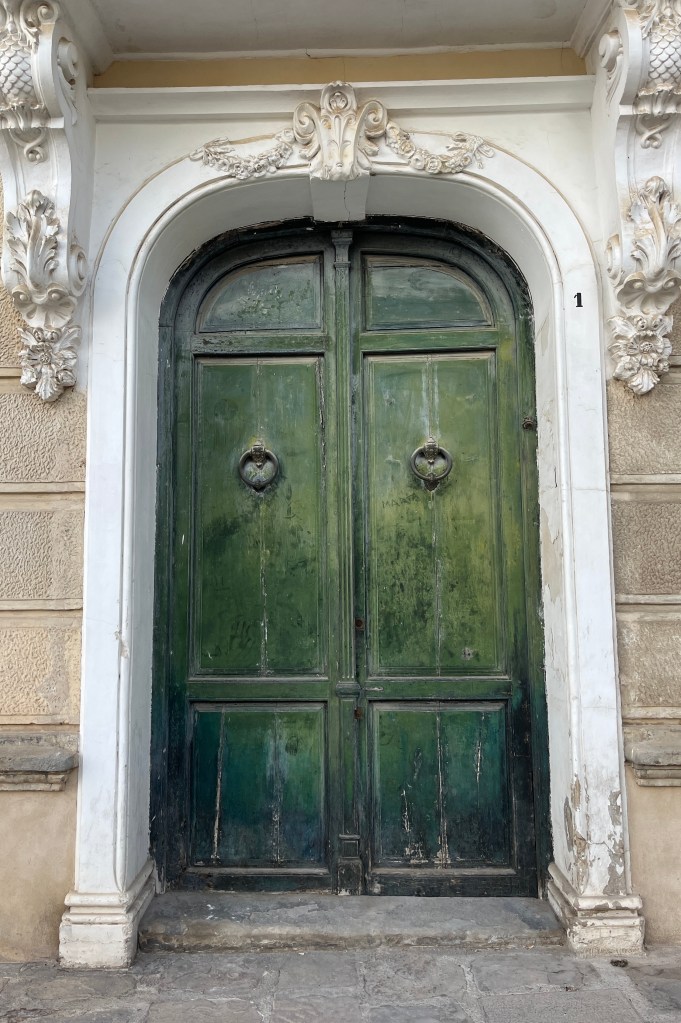
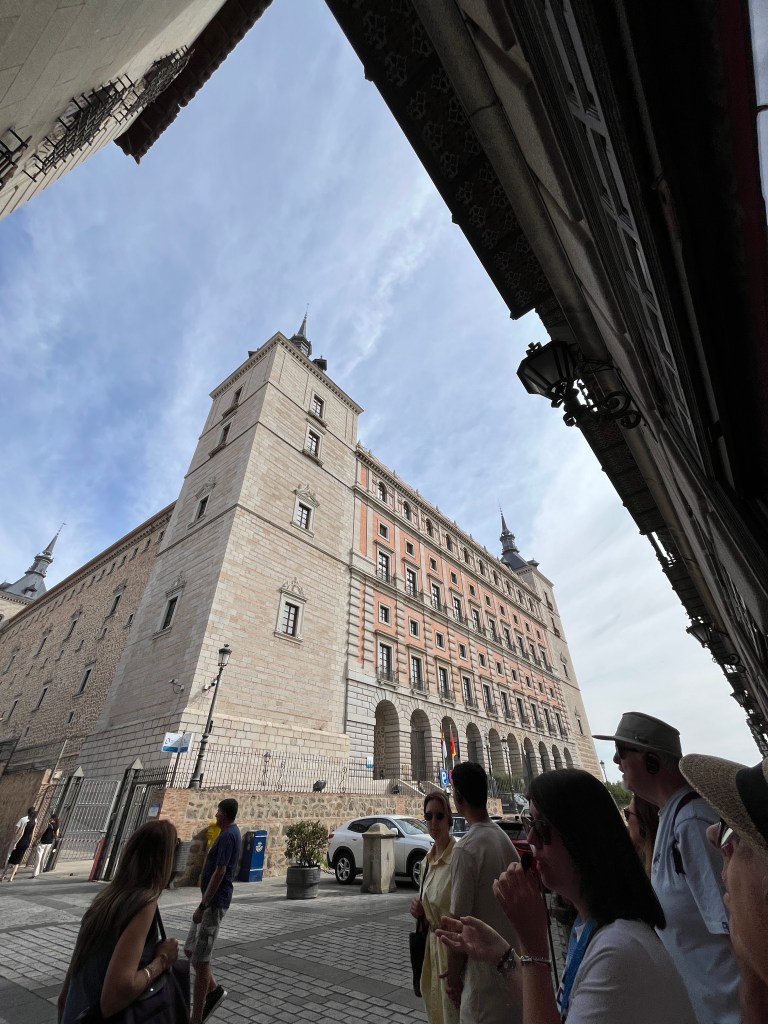
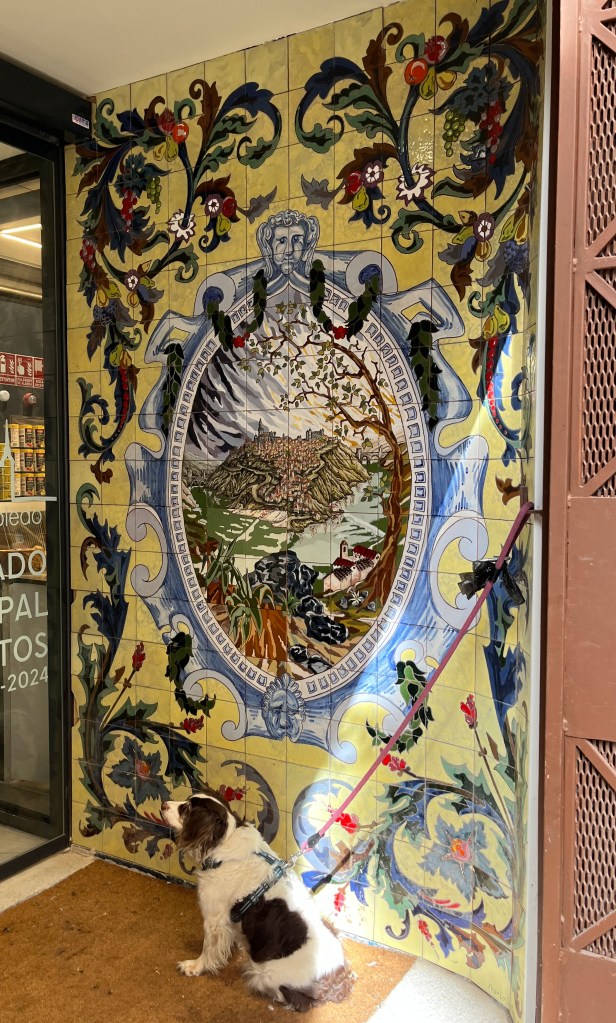
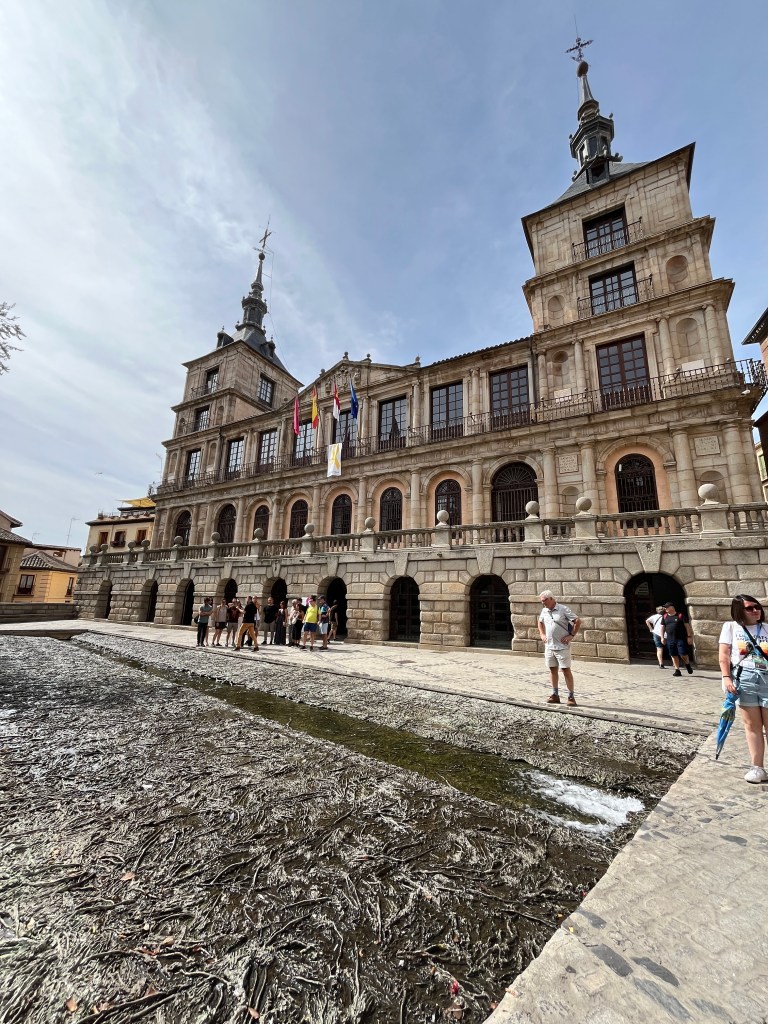
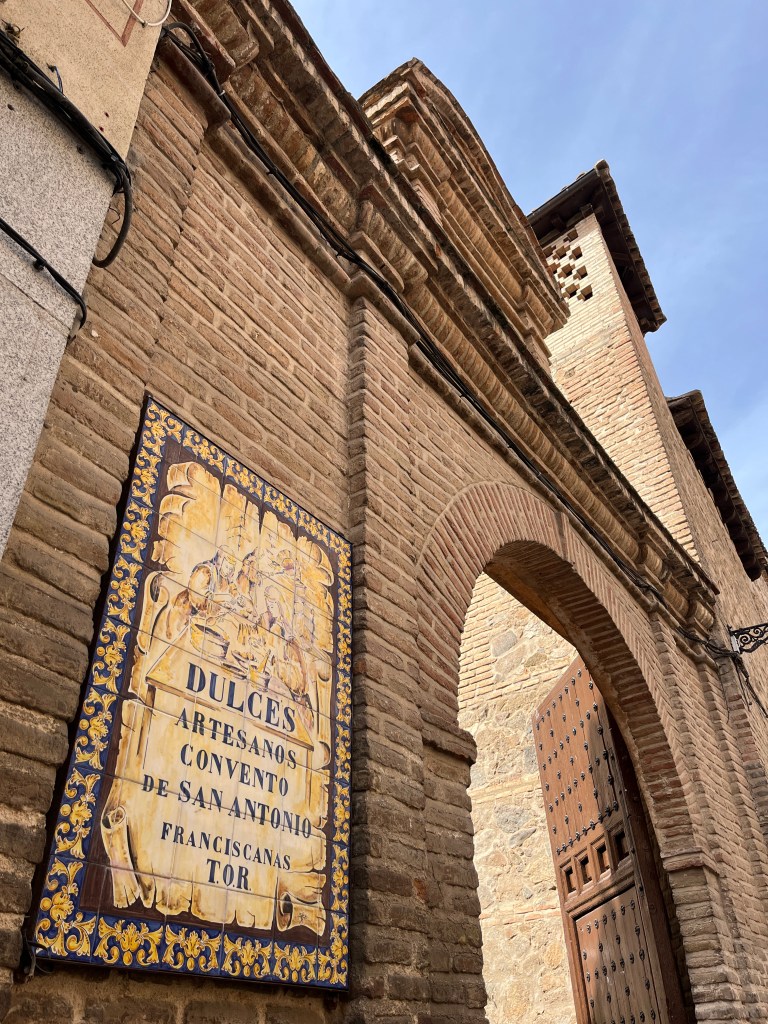
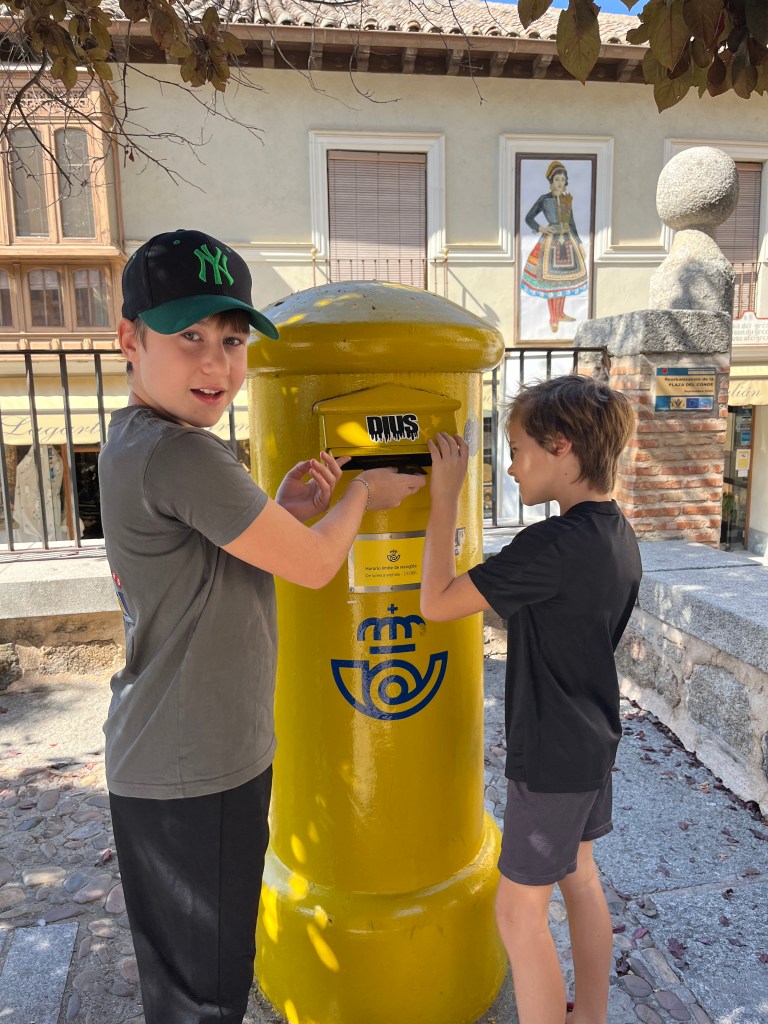
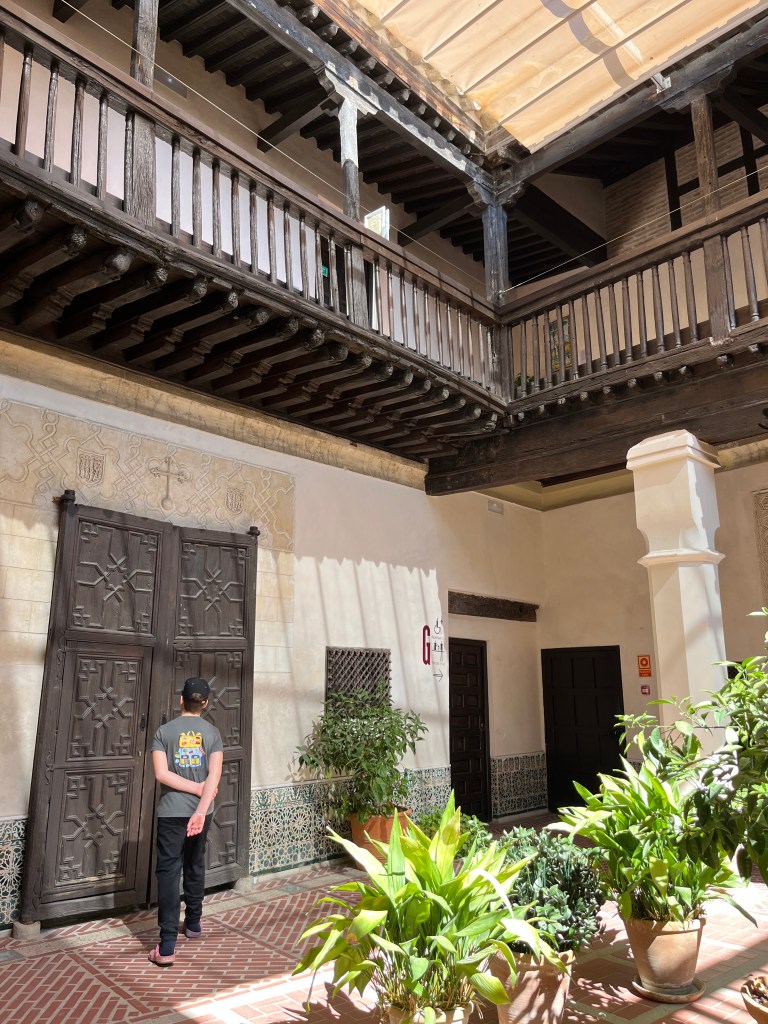
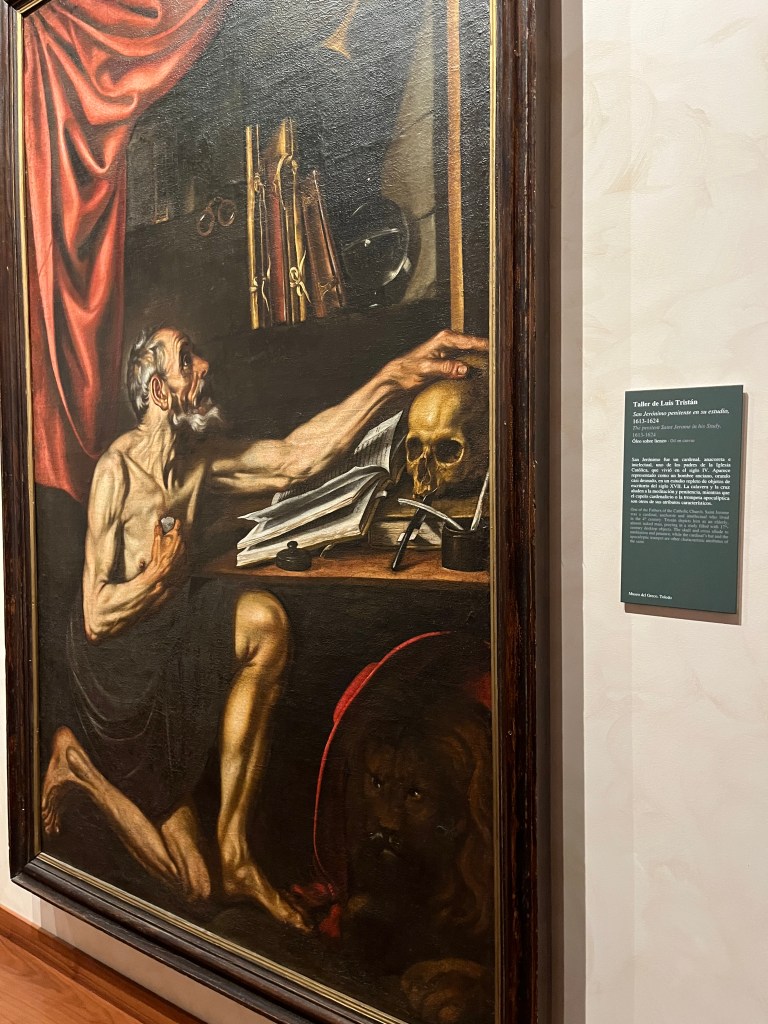
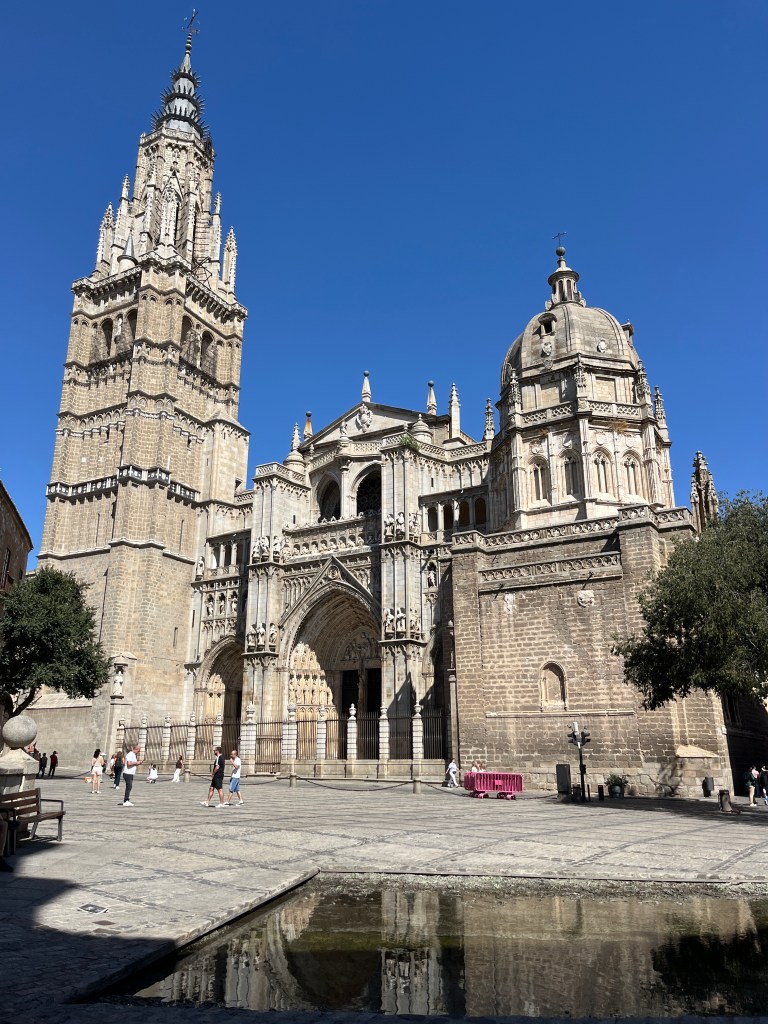
We are currently in an ancient city. Yes, another one. It’s a city of many stories… as “ancient” tends to mean. Toledo is known as “the city of three cultures” due to the triple influence of Jews, Muslims, and Christians in the city’s striking physique and eventful saga. This title is a bit misleading though. While Toledo did enjoy a few centuries of thriving coexistence between these faiths under Moorish rule (715-1085 CE), Toledo wasn’t a very nice place to be for non-Christians under the Catholic Kings. From mob violence and forced conversions to spectacles in plazas glorifying executions during the Inquisition, “the city of three cultures” seems like a bit of a whitewash to me. Still, you can certainly see “three cultures” of influence in the city’s architecture: the keyhole doorways and geometric tile-work of Arab years, the old synagogues and labyrinthine layout of the Jewish Quarter, and the colossal presences of the Catholic cathedral, churches, convents, and monasteries, of which many are still active.
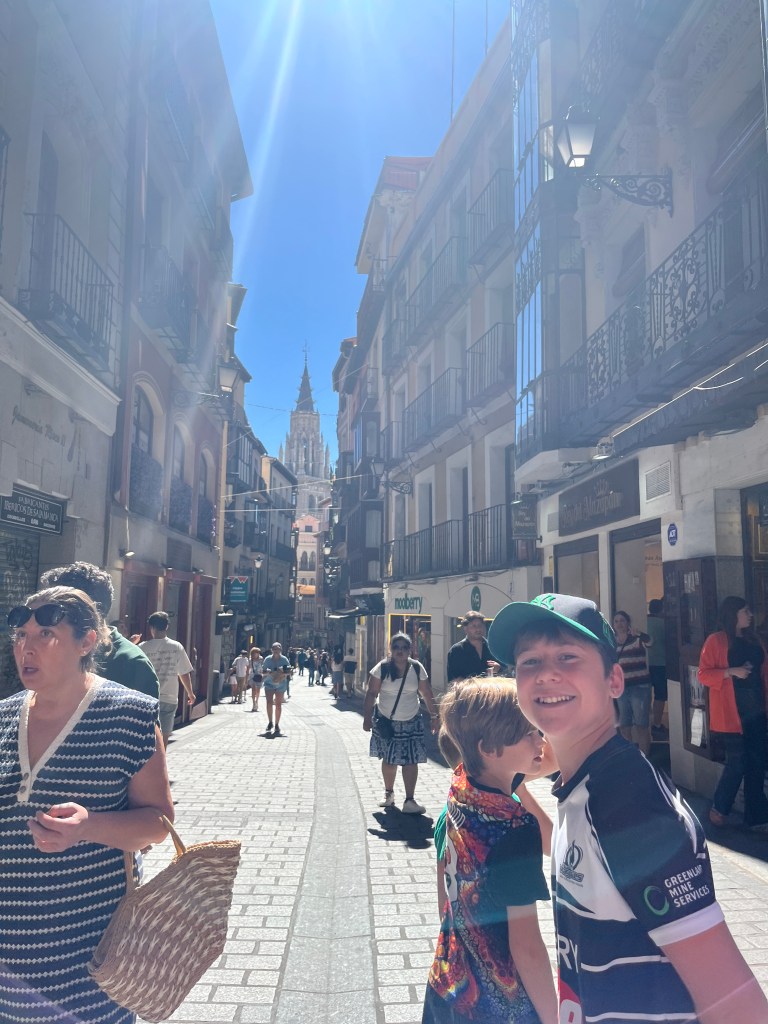
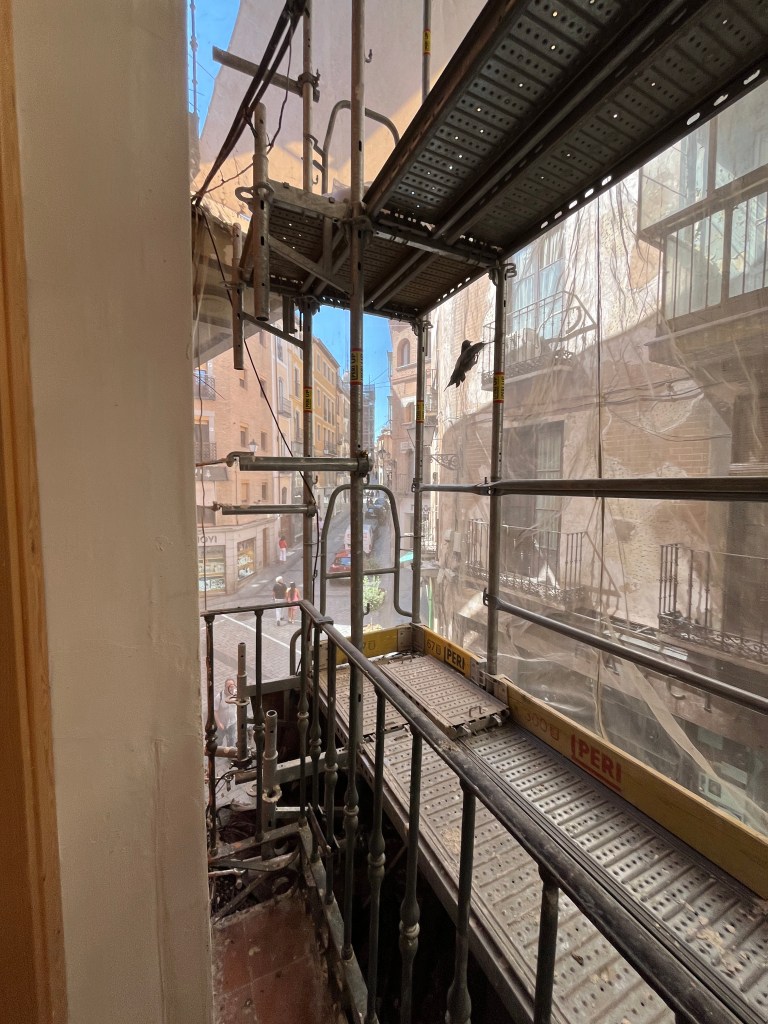
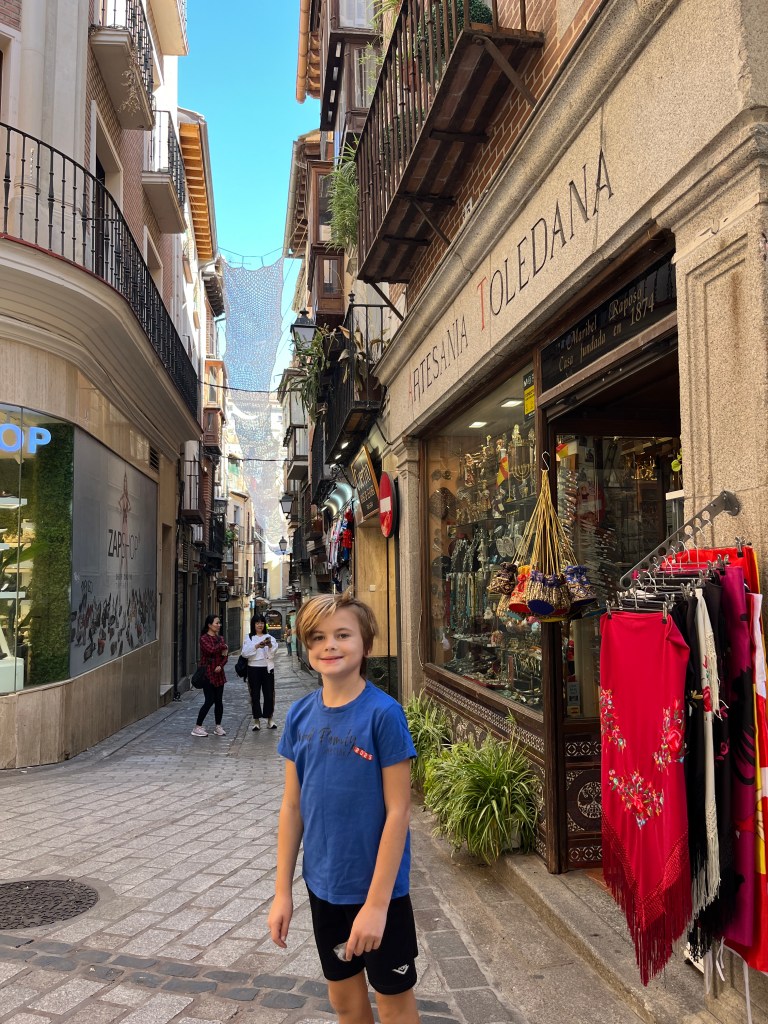
It’s a beautiful city in which to wander, even in the heat of the day. Our city tour guide explained that the passageways of the city are notably narrow for two reasons. First, these slender roads give little opportunity for the sun to fall between the buildings and bake their facades, giving the city’s inhabitants a chance to stay cool in Spain’s oppressive heat. Second, these constricted passages made for a good defence, limiting invaders’ ability to infiltrate and manoeuvre cavalry in any effective manner within the city walls. This tactic also contributes to my modern pedestrian experience here. The closely-laid stone walls are unforgiving to paintjobs and serve as brilliant deterrents to the invasions of most automobiles- except for the bravest of drivers, some of whom are apparently more intimate with the dimensions of their car than I am with the back of my hand. Anyway, these squeezed lanes of stone that dip and curve offer a charming atmosphere for strolling. A time-traveling spell can befall you if you are imaginative enough… or if you’ve had a cerveza or two at lunch and a busker starts to strum.
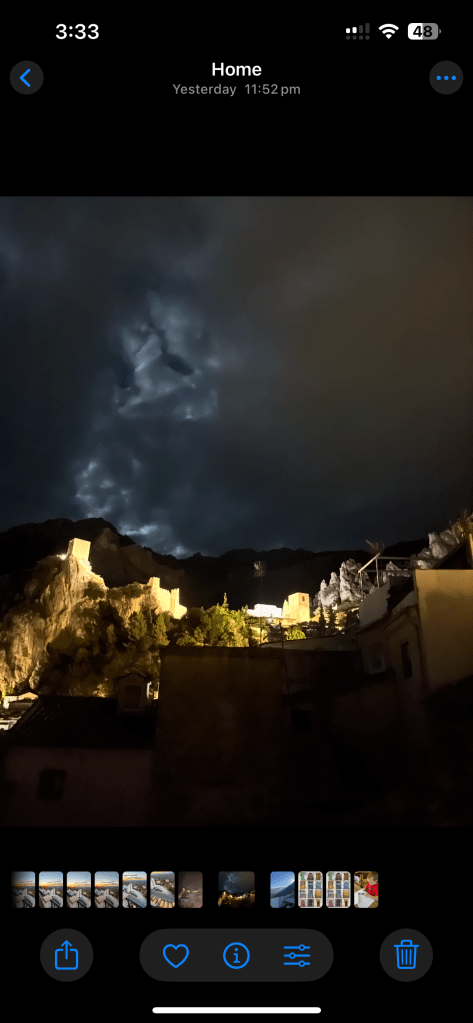
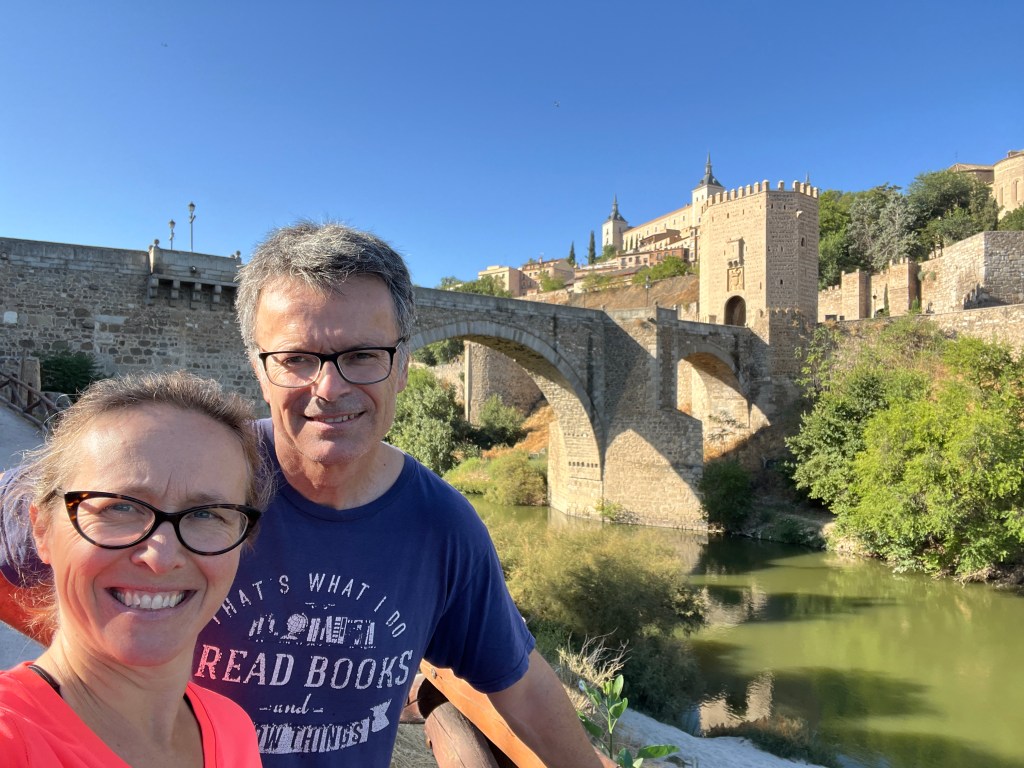
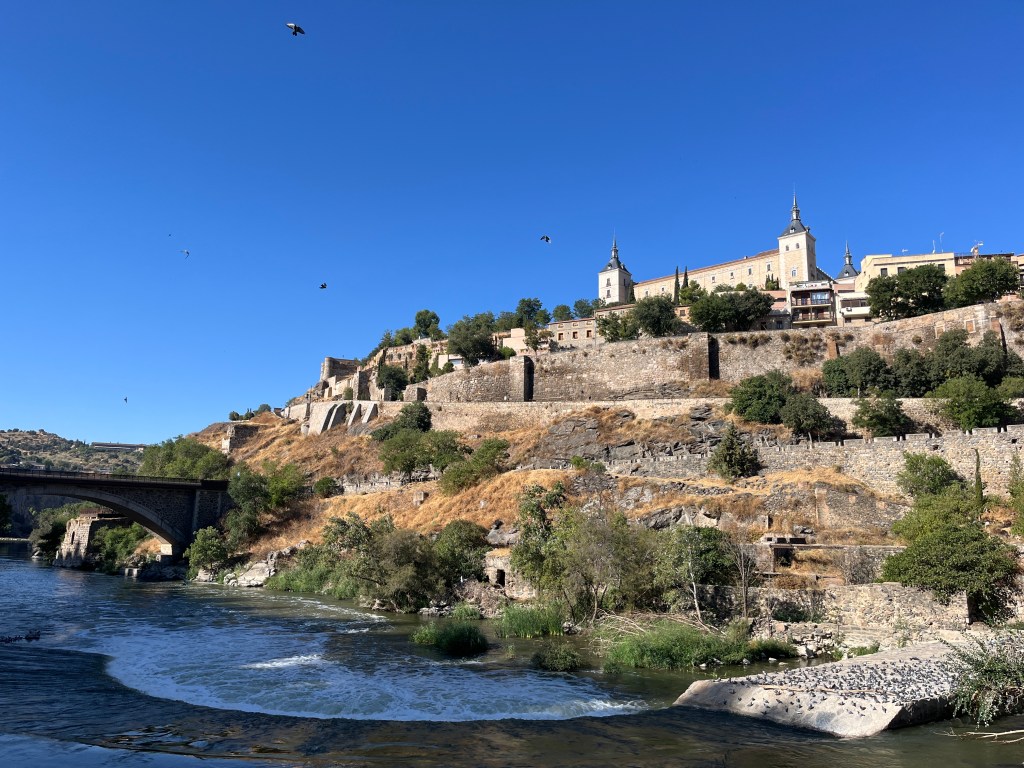
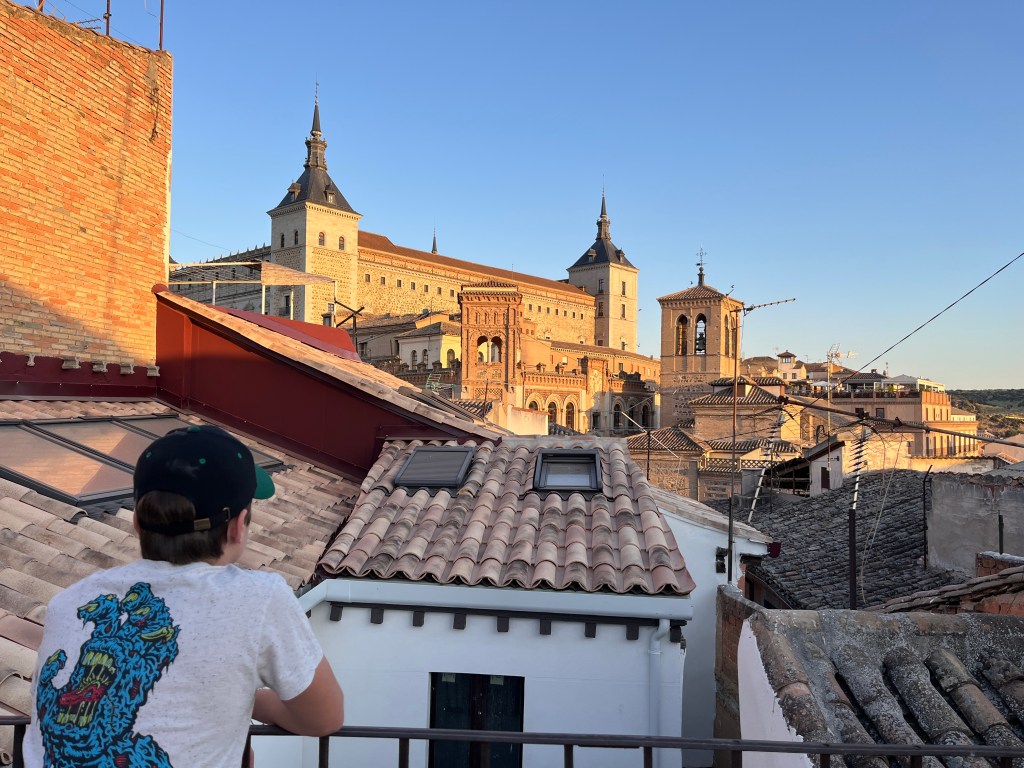
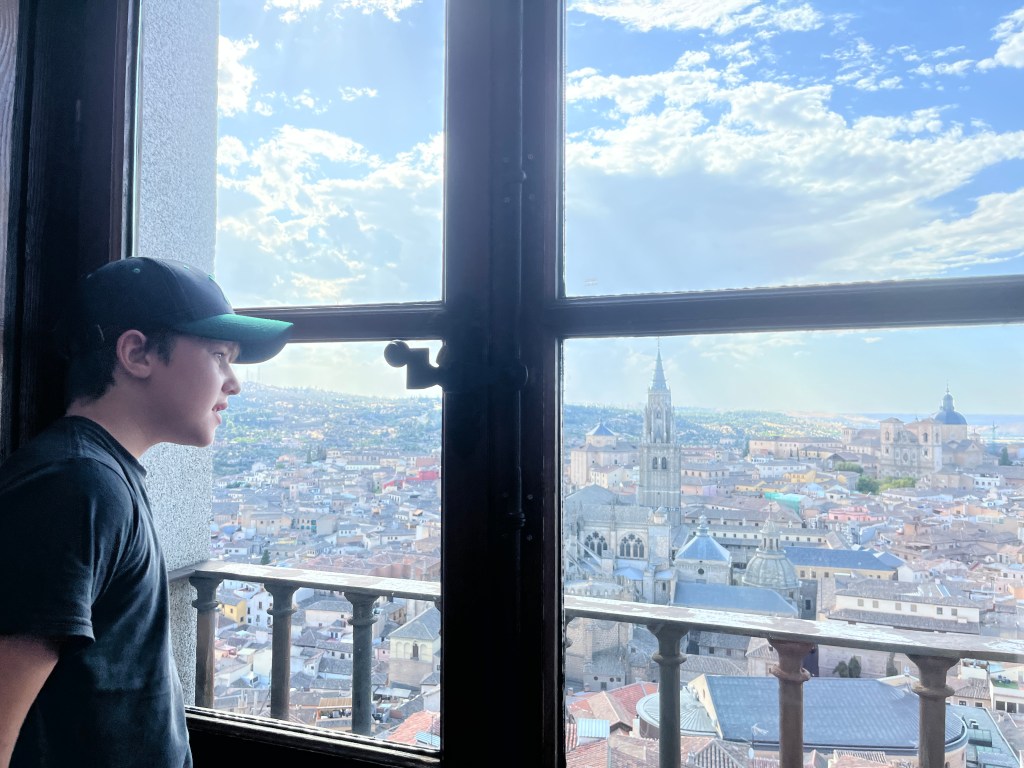
The name Toledo comes from the Latin word toletum, which is referring to the elevated positioning of the city. The actual meaning of this word is debated, apparently- “hill” or “raised.” Not sure who actually has such debates, but you get the gist. It’s lofty, and the Romans who named it thought this distinguishing feature should be noted in the naming. And it should be. This city does have quite the distinguished positioning, which is probably part of the reason it was the capital for a spell or two. I didn’t get any photos to capture its full form, but the Old Town caps the top of a prominent hill and is ringed with stairways and walls fitted with high, commanding doors for entrance. Surrounding all these ancient stone structures, deep in the valley, the Targus River snakes along three sides of this natural rise in the Earth. It’s quite the formidable sight to see, and I’m sure the effect was even greater through ancient eyes.
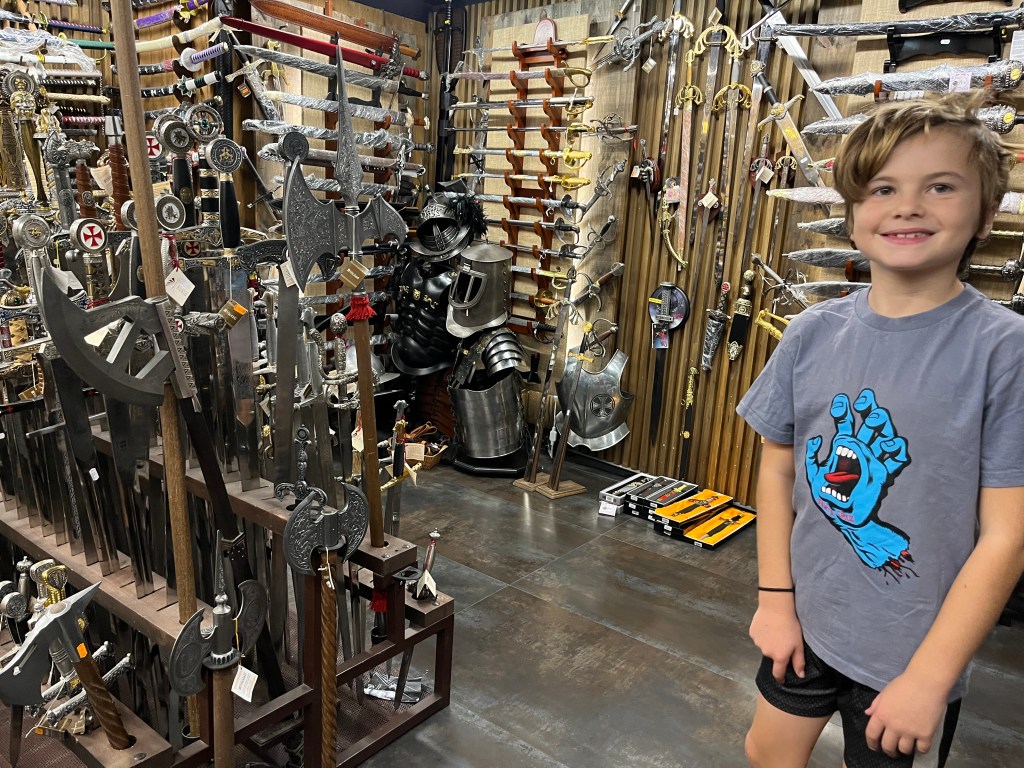
Walking the sturdy stone streets of Old Town, just outside our apartment door, one sees shopfronts that tell a thousand tales- fiction and non. The windows lining these narrow streets are filled with swords- racks, cases, shelves, grand displays fanning out great blades taller than my boys. And I’m not talking swords of a certain era. They have… every… sword… imaginable: from The Lord of the Rings Elven blades to King Arthur’s Excalibur, from Conan the Barbarian to Zelda, from Gladiator to Highlander, from Frodo’s Sting to Wonder Woman’s Godkiller, from Zorro to The Three Musketeers, from Japanese Anime katanas to swords that are probably from video games and table-top role-play games I know nothing about. There are Templar, Roman, and steel of all other historical eras. My personal favourite is The Bride’s blade from Tarantino’s Kill Bill, complete with Hattori Hanzo’s mark. Or, maybe, it’s Arya Stark’s Needle. I’m not sure.
Of course, when a thing really catches on, the phenomenon bloats. Now, blades of all intent and international origin are for sale: kitchen cleavers, machetes, axes, spears, Swiss Army multi-tools, German steak knife sets, butterfly blades, daggers, and pocketknives. Even sewing scissors and ninja stars are available for a pretty penny… also, helmets, suits of armour, weaponised jewellery, Christmas ornaments, and letter-openers. So, one wonders why. Or… maybe they don’t… but I do…
Well, the history behind all these sharp edges is the history of “Toledo Steel.” Famous even back to Roman times for their light but durable blades, this coveted alloy recently regained popularity after a long period of relative irrelevance. Thanks to Hollywood, when the movie El Cid had Charlton Heston wielding blades made in Toledo’s secret formulation, there was a revival of appreciation for the skill of the local master craftsmen. Apparently, the forging involves a hard and a soft steel composite, which allows for a thin edge and light weight but retains strength and flexibility. Whatever the secret, they’ve maintained their heritage well and managed to whip up a marvellous modern market for their legacy. One wouldn’t come to this city and not notice the weaponry. I feel we’re escaping well with only one Templar helmet and a couple of short Demon Slyer katanas (The kids’ swords are metal but blunt and too cherished to be entered into true brotherly combat).
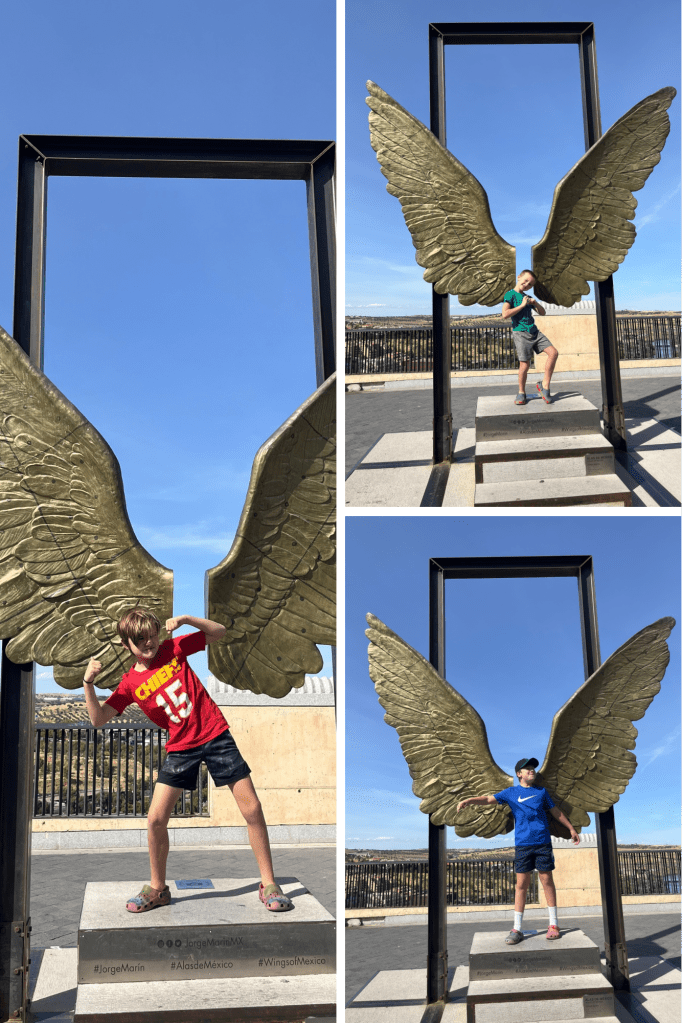
Contrasting this legendary sword-smithing, Toledo seems to have a softer side, as well. It is also a city of feathers. I’m not sure if I have new vision, but I cannot remember ever seeing so many falling feathers in a city’s streets. Whenever we are out, little white fluffs can be seen to drift silently down from pigeon roosting spots on roofs and balconies. These lonely snowflake plumes fall more frequently here than in other cities, I’m sure. They draw my attention regularly, and they breathe a message into my thoughts: “Wake up. Look around.” I think their prevalence may have something to do with the narrow streets. Maybe the abundant shade is more welcoming to pigeons, too? Regardless, I am very much appreciating their other-worldly awakenings. I feel a lightness in their gentle, transitory movements, so contrasting to all this old, unmoving stone.
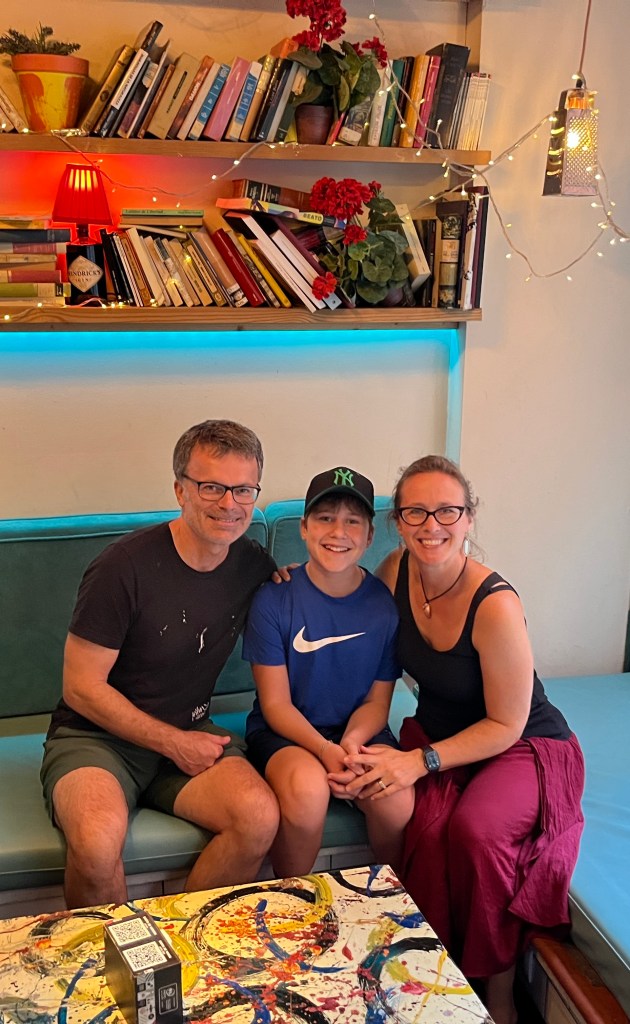
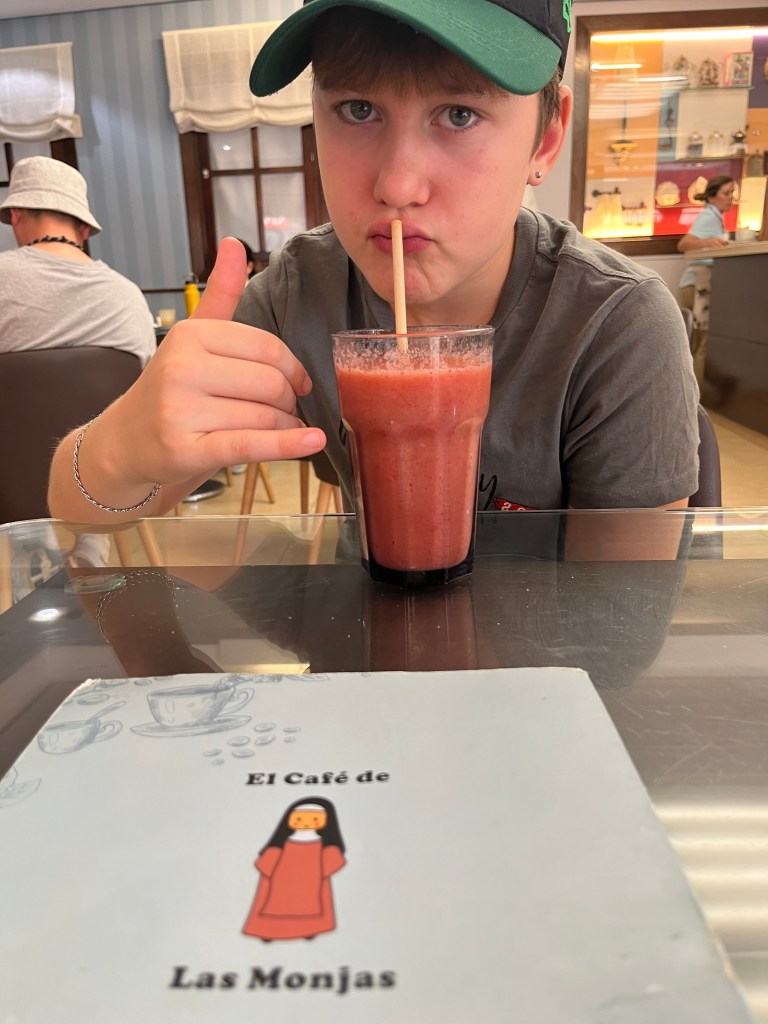
Our time here has been quite gentle, too. Good for reflection. As before, the kids are pretty low on cultural enthusiasm. And me too. My poor partner is still slaving away on Sydney hours, which means taking odd runs at sleeping throughout the day and night. It’s very wearing. Add to this the fact that the boys and I got our first colds of the trip this week, and you can consider us properly grounded. It actually seems quite miraculous to have managed so long with all these foreign germs and to only have had a stomach bug (possibly induced by the intentional consumption of Cambridge River water). The overall effect of the illness has been nice though. Our days are seriously numbered, and I’m glad to be forced to just rest and be. I even declared a couple of world-schooling “sick days” and took a silly amount of joy in bucking my own educational regimen. Sitting around watching Netflix together, having aimless walks, stopping for a drink at a nearby café, cuddling late in the day, and chatting around visions of our paths ahead, it’s been fertile time to take in all the mundane treasures of this trip.
While this blog has been a great way to display our impressive resume of travel experiences, I’ve been spending this downtime considering all the uncelebrated gains of this gap year. Aside from all the Whys that await us in the future, our family has also had a very rare opportunity in just being together for eight months straight. In fact, my kids have been out of school with me unemployed for ten months. That’s a massive amount of time to be together by modern family standards. That’s more than Covid lockdowns even provided. And, while I used to feel like school holidays required a great deal of mental prep and planning, now being together feels quite natural. I mean, shouldn’t it? I don’t know. It certainly didn’t before. And, now it does. There is a complex transformation there. A glorious one. I know how to be with my own offspring. Wow. Amazing.
Now, I’m not saying all this time together has been easy, but it has allowed for a lot of growth, much of it the growth of hardship, which usually bears some pretty juicy fruit. Many crops have been sown and tended in this garden of mandatory family bonding. It’s good to inventory the yield. Patience, tolerance, apology, forgiveness, perspective-taking, self-reflection, and grace-giving have all matured in each of us to varying degrees. The boys have learned to work through their fights, consider other people’s perspectives, and allow grace for the challenges each of us is up against.. though the “challenge” of “being a twerpy little brother too young to understand or care” is a hard pill to swallow. Granted. Regardless, the seeds of compassion are germinating in their own needed ways. It’s been good growth.
Perhaps, the most important of all this learning, though, is the ability to apologise and forgive. And to do so as often as needed. This gap year has been an intensive and accelerated program in “Sorry.” This neural pathway in our minds is very well-formed now, I’m happy to say. Sometimes it takes a while for our brains to allow the words to come out of our mouths, but we all know how to say, “I’m sorry.” Sometimes it’s mumbled. Sometimes it comes out as a hug and a grunt. Sometimes it’s said into the darkness at bedtime. Sometimes it is hollered from another room, and sometimes it comes when the other person has forgotten there was a transgression that had passed. Sometimes “sorry” comes with an explanation of “I just…” and a conversation follows. It’s all okay. It’s all repair. Rupture and repair. That’s what healthy families need to know how to do. It’s part of being a human in relations with other humans. Forget your pride. Own your errors. Honour the other person’s experience. Get over yourself and say “sorry.” We’ve gotten really good at this. And I’m really proud of it. Really proud. We break and bruise, and then we repair. None of us is ever going to stop being human, so learning to patch things up is a very handy life skill.
And, related to this, we have learned that “sorry” doesn’t mean it won’t happen again. Just as we know another family member is likely to commit the same annoying infraction of our familial expectations, we know that we, ourselves, will probably repeat some emotion-driven mistake that bruises a relationship and inspires remorse. I think we have all observed a very key pattern emerge in this. We’ve seen it in ourselves, as well as each other. With so many days spent only in each other’s company, our shared patterns of humanness are very much on display. The human propensity for our behaviour to escape and outrun our higher intentions has been played out over and over. In our efforts to have a more peaceful family, we have all been forced to recognise that we are faulted… and that we always will be.
No matter what you do, you will fail to be the person you want to be in some moments. No matter how old you get, you’ll do something dumb. No matter how careful you are, you’ll break something. No matter how committed you are, you will indulge an urge. No matter how many times you have regretfully taken the bait from someone you know is intent on getting your goat, some days you won’t be able to resist a nibble that’ll hook you and yank hard. No matter how many times you’ve told yourself you won’t yell or respond or retaliate, you will. Now matter how aware you are on a given morning that you are locked and loaded for a fight, your higher self will not be fast enough to hold fire when your grumpy self gets triggered. When you’re tired, when you’re hungry, when you’re sick, when you’ve already had a few provocations, you will misbehave. You will indulge your lower instincts. It’ll happen. None of us is on the path to graduating humanity. We are human, and we will always find ourselves entangled in the sticky business of human fallibility. All we can do is try. Try. And then remember that the people we love are trying too. And when they fail, we make room for apology. And forgiveness… even if it’s for the sixty-seventh time for the same damn thing. That’s what love looks like. That’s what family means.
There are so many more subtle gains to be celebrated too. They have appeared before me this week. These months together have been a rare and unrepeatable gift, and the greatest treasures have been modest and private. It’s being curled up on beds and sofas in fourteen different countries working through the IXL app on iPads. It’s the unexciting conversations we had about comma placement, Roman numeral calculations, and parts of speech (which I actually enjoyed). It’s reading Diary of a Wimpy Kid and noticing the increased ease of pronouncing more complex words. It’s watching my boys strip a bed, do a sink of dishes, or hang up the washing (not that this happens a lot or without request). It’s finally hearing the words, “Can I help?” or “What can I do?” on occasion. It’s bandaging a bloody little knee with delicate hands and creative distraction. It’s collecting lost teeth in a plastic bag that lives in my make-up case. It’s painting tiny toenails orange in the Spanish sunshine. It’s watching my boys observe the world around them- pointing out the moon phase, offering a homeless person coins, or chasing seagulls on a beach to protect the crabs. It’s seeing a boy walk into a shop alone, knowing he has the confidence to conduct a transaction in Spanish. It’s observing their pride as they list how to say “thank you” in a dozen different languages. It’s seeing these previously rigidified boys adapt to a new “home” again and again and again- over thirty times. It’s the smell of their skin in the morning, the weight of their heads on my shoulder, and the way each of them moves with a different energy- one bounds, one strides, and one struts. It’s the freckle emergences, the bone lengthening, and the bulks of their shoulders that seem to spread like wings. We’ve had some rough times, to be sure, but the beauty of our mutual influence and the depth of presence we have shared is far more life-defining than the struggles we have faced. And even the struggles were shared. That’s no small thing.
When people ask about this gap year, I’ll probably fan out the big blades like a sword display in a shop window: cliff jumping, camel rides, fishing charters, ghost tours, that sort of thing. But, while it is often the big, shiny things in life that capture one’s attention, it’s really the slow falling feathers that carve the channel of a life. The famous sights, the novel activities, and the post-worthy images are not what has truly educated our humanity on this trip. It’s been the quiet moments of awareness that have roused our wiser selves. It’s been the slow trickle of poignant recognitions that has worn the more meaningful passages of our minds. From awkward encounters and stifled criticisms to the dawning awareness of another’s struggles, from sharing spray deodorant and enduring forced sessions of Sponge Bob to drinking long-life milk for far too long, there aren’t words to capture all that has passed through our family on this gap year. It’s impossible to articulate. What can be said from this sick-bed reflection is this: The feather, too, is mightier than the sword, and all these gentle moments have made a million marks.

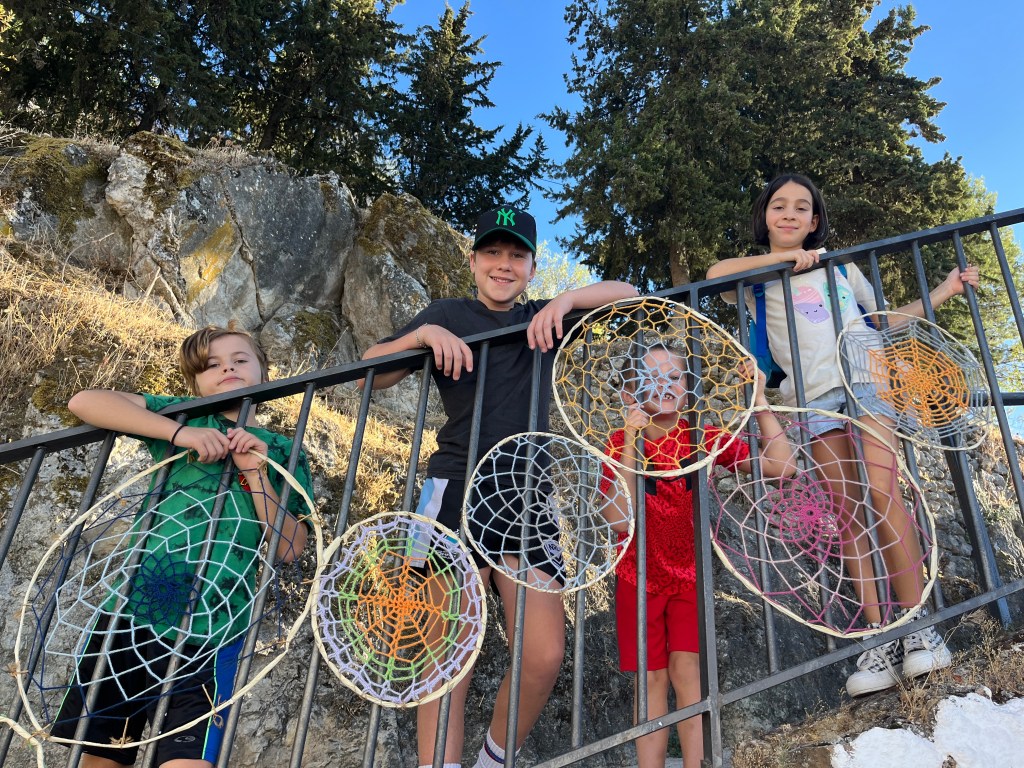
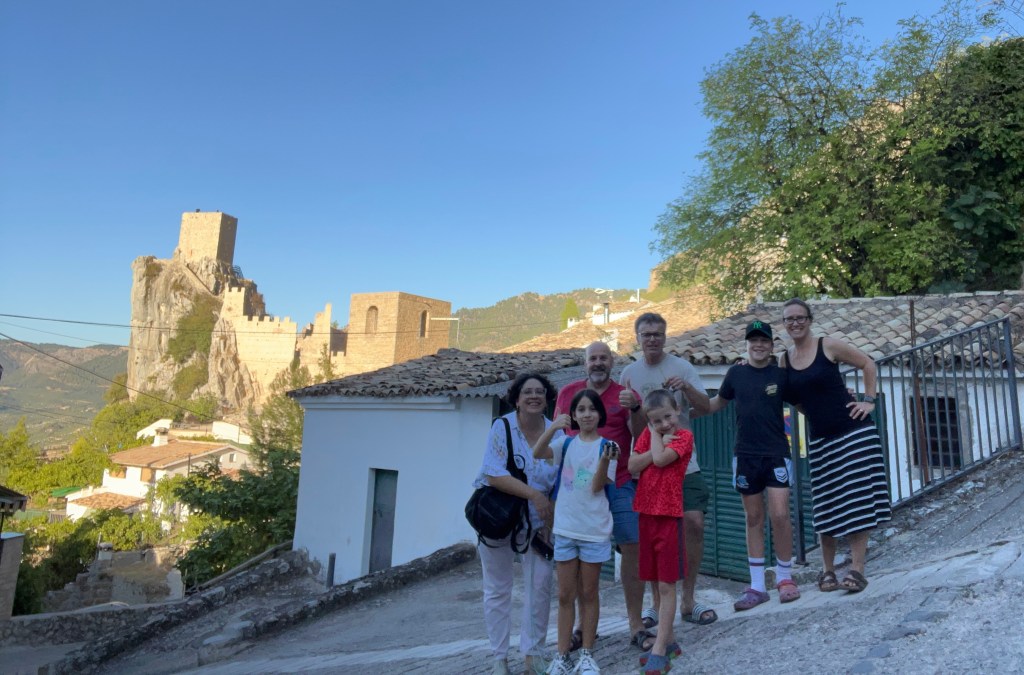
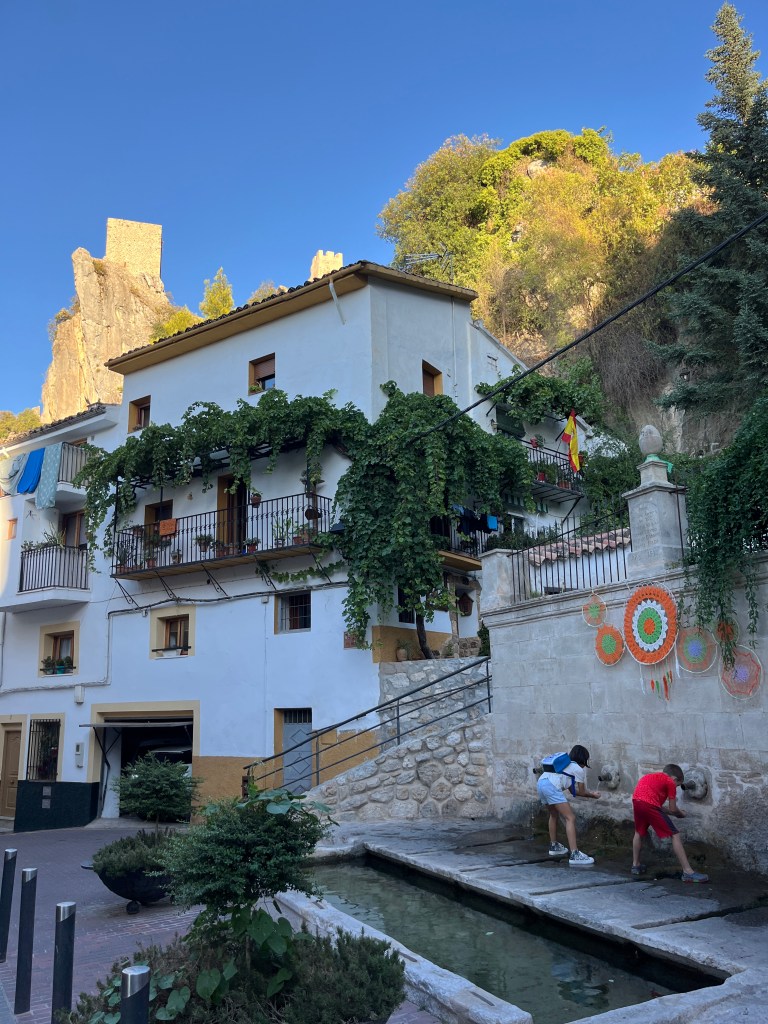










Seven days to go… the final feathers are falling…


 Mapping the Gap
Leave a comment