Just before we left Australia, my partner and I were in a “parent coaching” session to help support one of our boys, and the therapist brought up the subject of “Third Culture Kids.” Her stated intention, in light of our upcoming long-term travel, was to give us some consideration for how this gap year might affect our children. You know, their sense of identity, their sense of belonging, the challenges they may face. For life. You know, “just food for thought.”
One website (openpsychology.es) explains this concept like this: “A Third Culture Kid (TCK) identity refers to the unique sense of self developed by individuals who have spent a significant part of their formative years living in a culture different from their parents’ home country.” Our therapist said a year or longer was the critical time. The idea is that TCKs develop a hybrid identity based on their heritage culture, the host-country’s culture, and, potentially, the shared experiences of expats from various cultures. Lots of humans have a developmental experience like this in some version of life’s unfolding: immigrants, military families, refugees, diplomats, world-schoolers, and families under the sway of various mobile professions.
Of course, there can be challenges to being a TCK, which was the therapist’s point. There can be a sense of not belonging anywhere, feeling misplaced and misunderstood- well into adulthood. Some research even says that adult TCKs can experience more challenges in relationships, lower career satisfaction, and isolation leading to depression. Even the original home country can feel wrong after having spent certain developmental stages in a culture other than their “passport culture.” The result is feeling that nowhere is “home,” and nowhere provides that sense of belonging among one’s peers.
When I responded to the therapist’s thinly veiled concern for our children with a furrowed brow, she assured us that there were also great benefits. Research shows that these kids often have greater adaptability, enhanced communication skills, and more advanced cultural understandings – all things we wanted our kids to gain on this trip. To peddle back her argument, she offered a comfort: “Barack Obama was a Third Culture Kid.” There was a reassurance in that, actually.
Really though, according to the definition, our children already were TCKs, having been born in America and spent seven, five, and two years there before moving to Australia. They already lived that sense of being an outsider and had retained certain linguistic give-aways of their foreign beginnings that set them apart- an ever-easy target of teasing. Also, I am certain these TCK issues are greatly varied based on the child’s specific situation: the age of cultural transition, the number of cultural transitions, and the degree to which their two main cultures vary from one another. I mean, surely an American-Australian kid would have less trouble than a Chinese-Peruvian, an Icelandic-Saudi, or a Mexican-German kid, no? A year of travel was unlikely, in my opinion, to cause any new rifts in our children’s identity formation. But, I did tuck the idea away in my mind for reflection down the road. I mean, we were hoping for some influence on our children. That was sort of the whole point. This was good food for thought… despite whatever warning this therapist was attempting to convey.
Interestingly, it was my partner who really identified with this definition in the therapist’s office. Having grown up between England and Australia, he has that sense of “neither here nor there” to his identity. And the accent to match. As she explained this phenomenon of identity formation, I could see his jaw-dropping. As her words shed light on his own lack of Australian cultural allegiance, a clear Europhile partiality, there was a dawn of understanding. It was a diagnosis for a long-felt sense of being somehow removed from his culture. This “stranger in a known land” sense is, again, another part of our gap year instigation. There is a seeking for that which one may never find, the seeking of a life-long seeker. It’s a lifestyle of existing ever-so-slightly on the periphery, living with roots seasoned and capable of transplantation, roots ever thirsty for the nutrients of new soils.
Somehow, despite our very different upbringings, we seem to share this seeker spirit, my partner and I. This subject got me thinking about my own cultural identification, or lack thereof. I love my people in America dearly, and I am definitely of their stock. I have great fondness for a few American cities, and I adore the cultural diversity there, but despite having little overseas exposure as a child, I don’t feel “at home” in America. In fact, I feel very much that it is not “home,” which has been a source of family ache and inconvenience for years. I think I’ve always felt a bit alien. Even as a kid, and especially as a young adult. And Australia doesn’t exactly feel like home either. (I mean, have you noticed my sloppy hodgepodge spelling and vernacular? Total hybrid. Traitor to both sides. Allegiance to none.) I don’t know if I have ever belonged anywhere.
It’s nice to have a partner in this. Crucial to happiness, probably. My partner and I have lived in three different countries together, but I think we’ve found that there is something in the culture of “us” that is “home.” I mean, how many people would really credit the country of their birth as the core of who they are, anyway? How many people find themselves associating their sense of self with the values and customs of a nation? It’s the culture of one’s family of origin, the culture of one’s chosen family, and the sub-cultures you are drawn to within a greater culture that provide most of the structural fibres of one’s identity, I would have thought. Granted, the greater culture is embedded within all those realms, but I’d think things like spirituality, recreation, and profession would matter more than your homeland, per se. But, what do I know about it? Just reflections. Identity is complex. That’s for sure.
And, that’s why I’m bringing this up now, actually. I’ve been thinking about identity. National identity, in particular, and from what it is constructed. We just spent the last week in a very intriguing capital city. Skopje is in the fairly unknown land of North Macedonia, and, from what I’ve gathered, there seems to be a cultural identity crisis here, a TCK syndrome of some kind going on. It’s a captivating place. I’ll fill you in… if you don’t already know. I’m guessing you don’t …
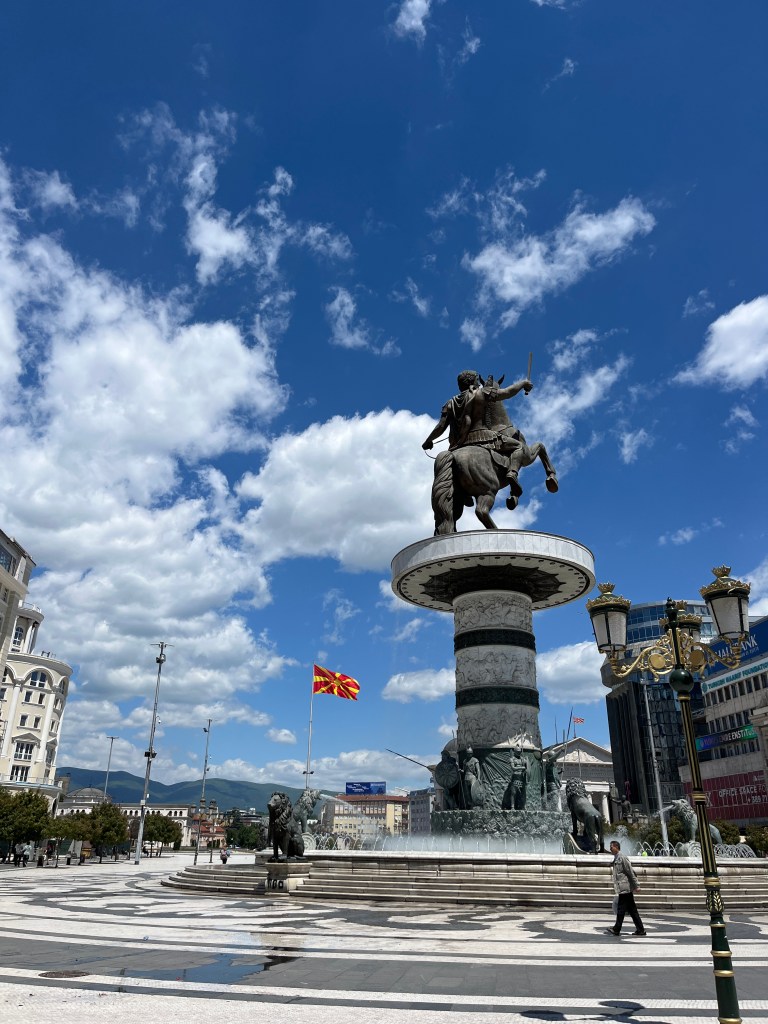
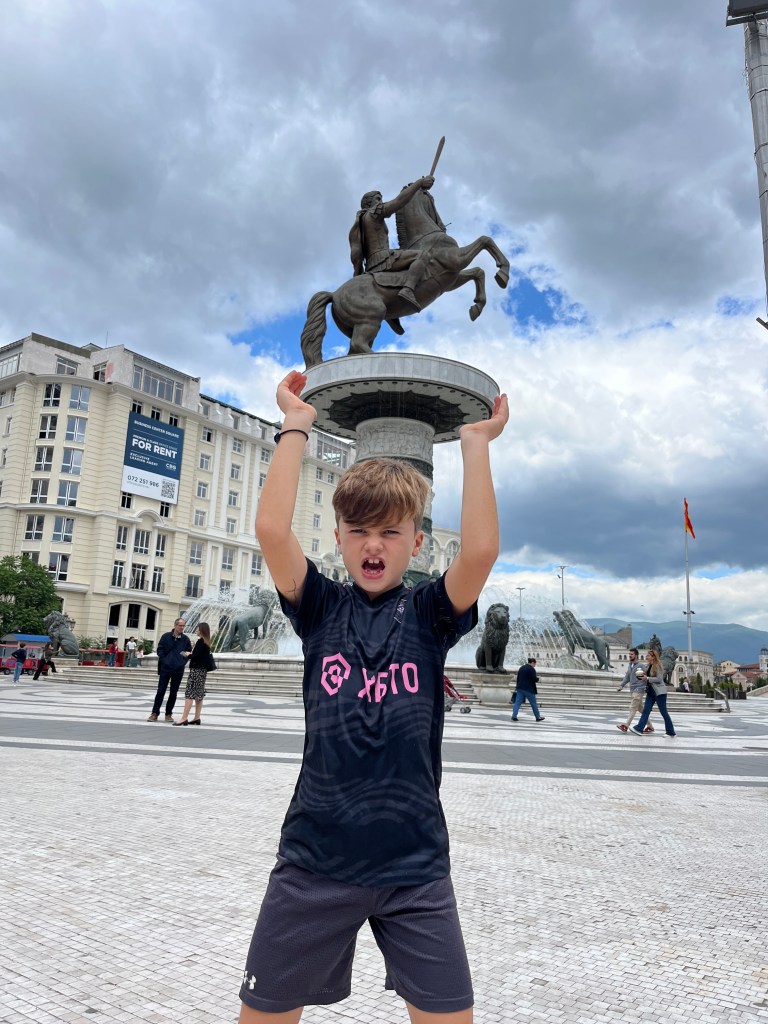
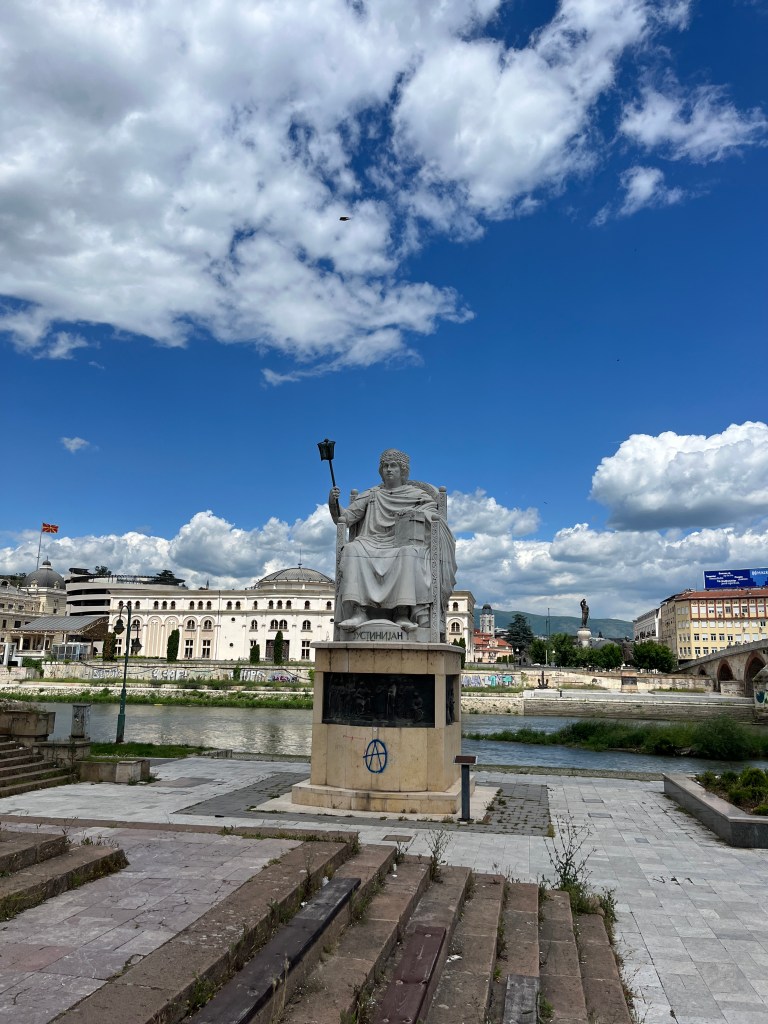
This little land-locked nation, about the size of Vermont, has had a lot of influences. It is north of Greece, south of Serbia & Kosovo, west of Bulgaria, and east of Albania. Like everywhere else around here, the ancient Greeks, the Romans, the Byzantines, and the Ottomans have all had their cultural influences that live on today. After WWII, these lands were absorbed as part of The Socialist Republic of Yugoslavia- a clustering of “Slavic” identities, though much diversity was among them. When this republic violently broke up in the early 90s, “Macedonia” became its own sovereign nation. However, after almost 20 years of nationhood, accused by the Greeks of cultural appropriation, the country was forced to change its name… and its flag… and the name of its airport…and even the name of its most prominent statue. You can almost literally observe the White-Out and strike-throughs of this nation’s cultural identification. It’s really extraordinary.
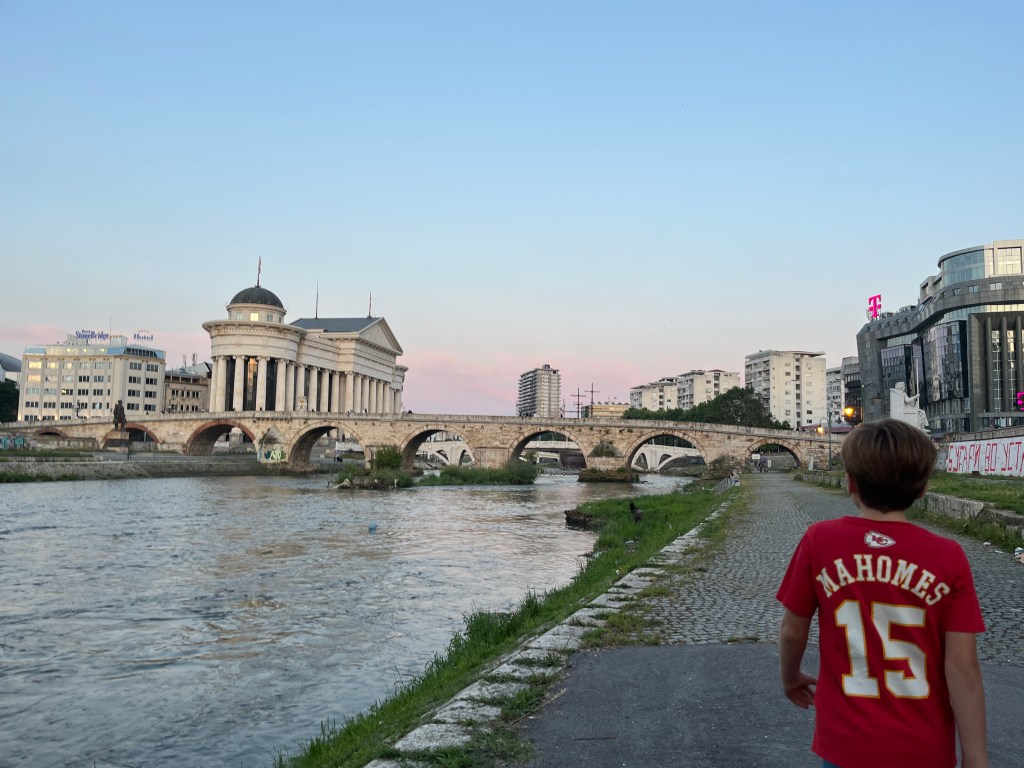
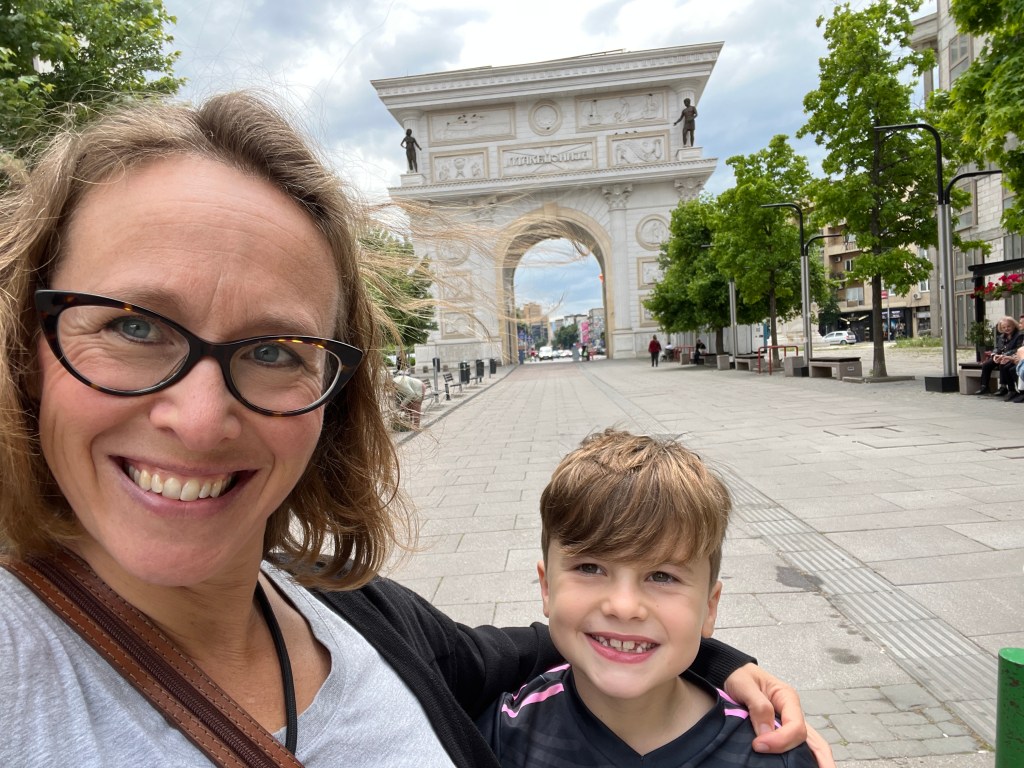
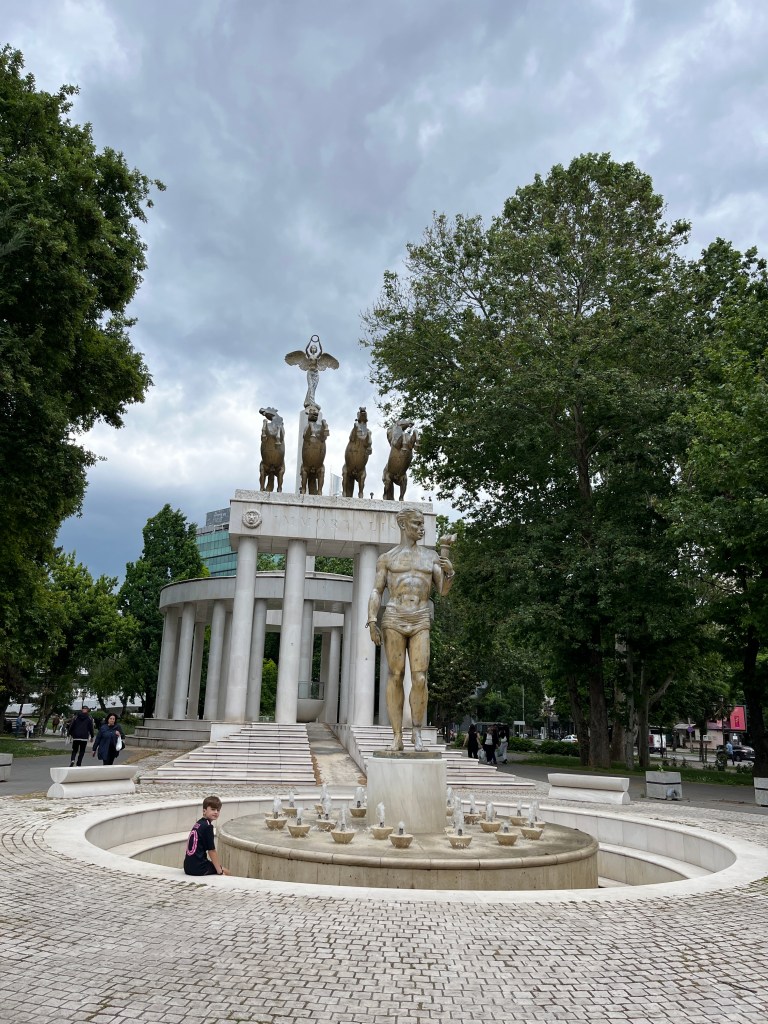
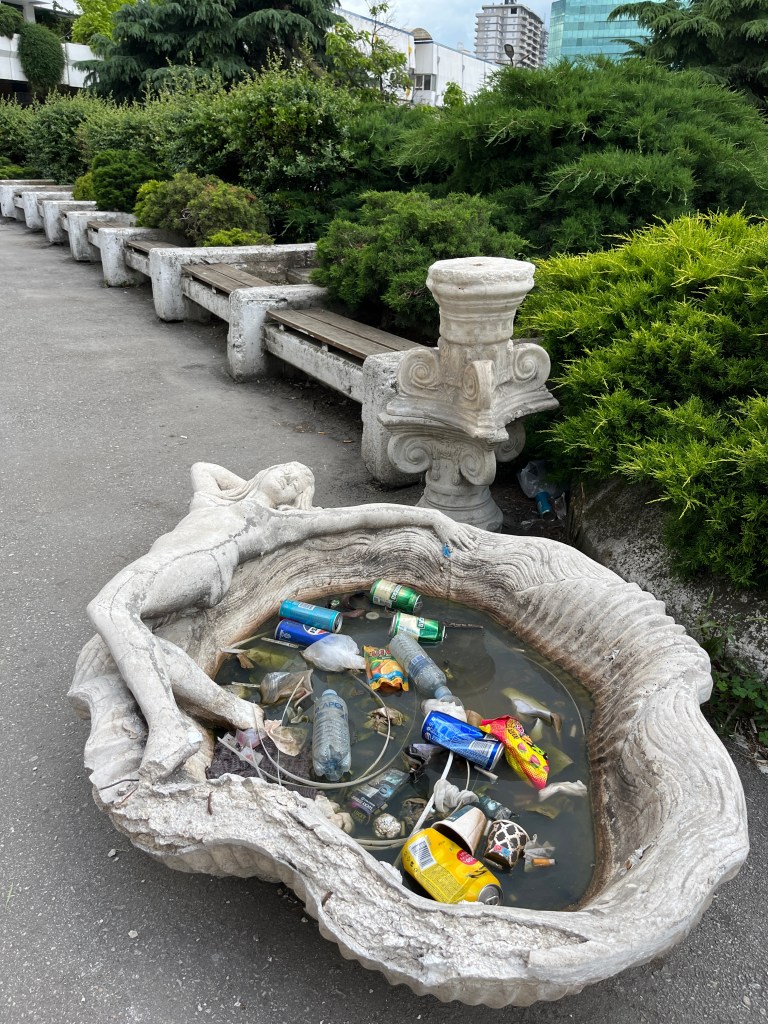
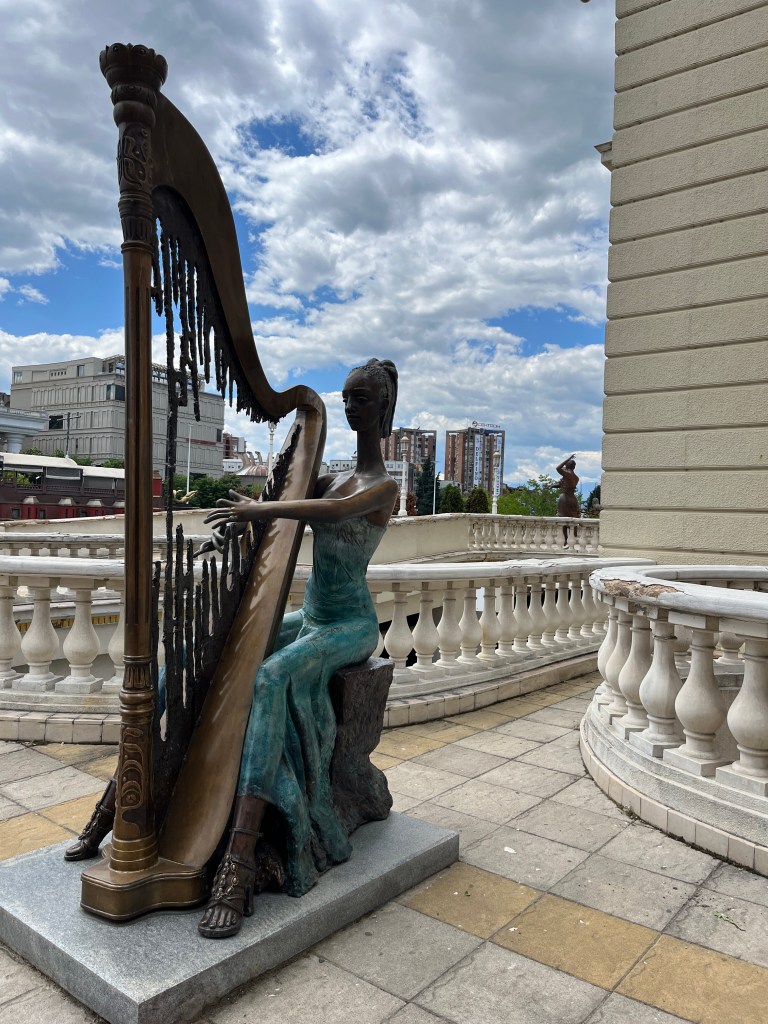
And if all that isn’t enough, there is also the recent controversial “Skopje 2014 Project.” In a stated attempt to enhance national pride and bring the city to a more metropolitan status, a so-called neo-classic “beautification” project was undertaken. And, 10 years later, it is a sight to see. Never have I observed such grand evidence of corruption and neglect. The bloat of power and stupidity is staggering. The photos don’t lie. You’ll see. No one would want to be represented in this way. It’s an embarrassment to the identity of the inhabitants who had no say in what this coffer-robbing project did to the face of their city. Actually, Macedonians are fleeing in droves, no doubt due to the lack of funds for a prosperous society. Of the nearly 2 million North Macedonians, almost half live overseas. Lots of TCKs in the making there. One can see why.
To consider a little more cultural context, North Macedonia is part of The Balkans, and I just learned the interesting origin of this word that encompasses 11 nations of this region: Albania, Bosnia and Herzegovina, Bulgaria, Croatia, Kosovo, Montenegro, North Macedonia, Romania, Serbia, and Slovenia. “Balkan” is derived from the Turkish words “bal” and “kan.” “Bal” meaning “honey,” a word I saw daily on the red honey jar lid from the market in Amasra. And “kan” meaning “blood.” The Balkans means “The land of blood and honey” (or rather “honey and blood” if the expression kept to word order). The internet offers many origins of this name, but the one I have chosen to adopt is the most general: There is great sweetness and abundance in this region but also conflict and a tendency towards bloodshed.
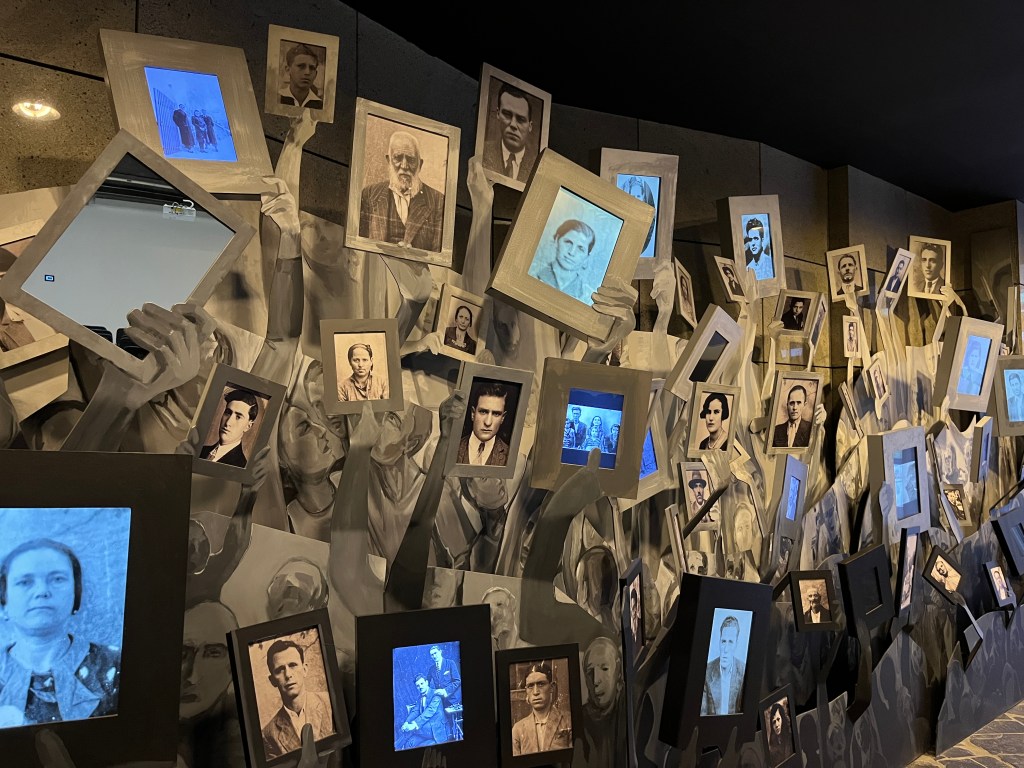
This “conflict” is a commonly associated characteristic of this region though today it is more undercurrent than outright clashing. As a child, I remember hearing about the “Yugoslav Wars” in the early 90’s. That was probably the first time I heard about “ethnic cleansing” or “genocide” in current events, but I had no geography or real-life experience on which to build any meaningful understanding as a school kid. Now, it is much easier to piece some things together, but I still find it untouchably complex. These wars 30-some years ago were a series of conflicts that took place after The Socialist Federation of Yugoslavia broke up and the various republics declared their independence, North Macedonia being one of them. Certainly, this history is one of the factors that makes this nation so complex. The recency of these conflicts makes it feel more relevant and ongoing than many of the histories we’ve been learning about so far this year.
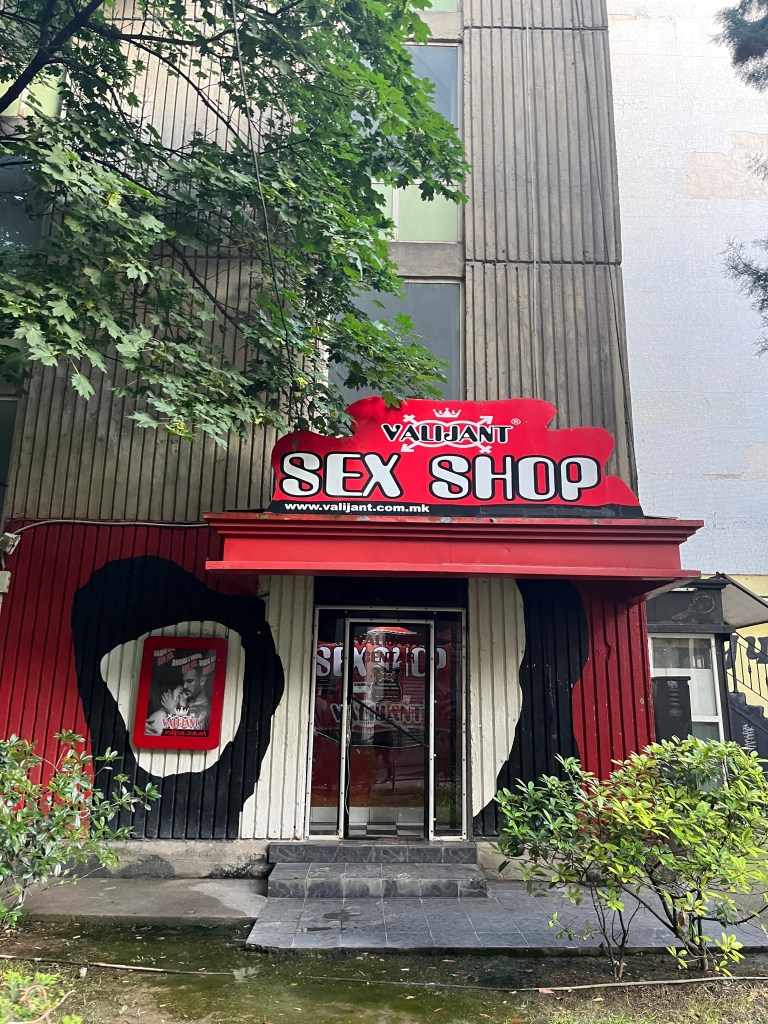
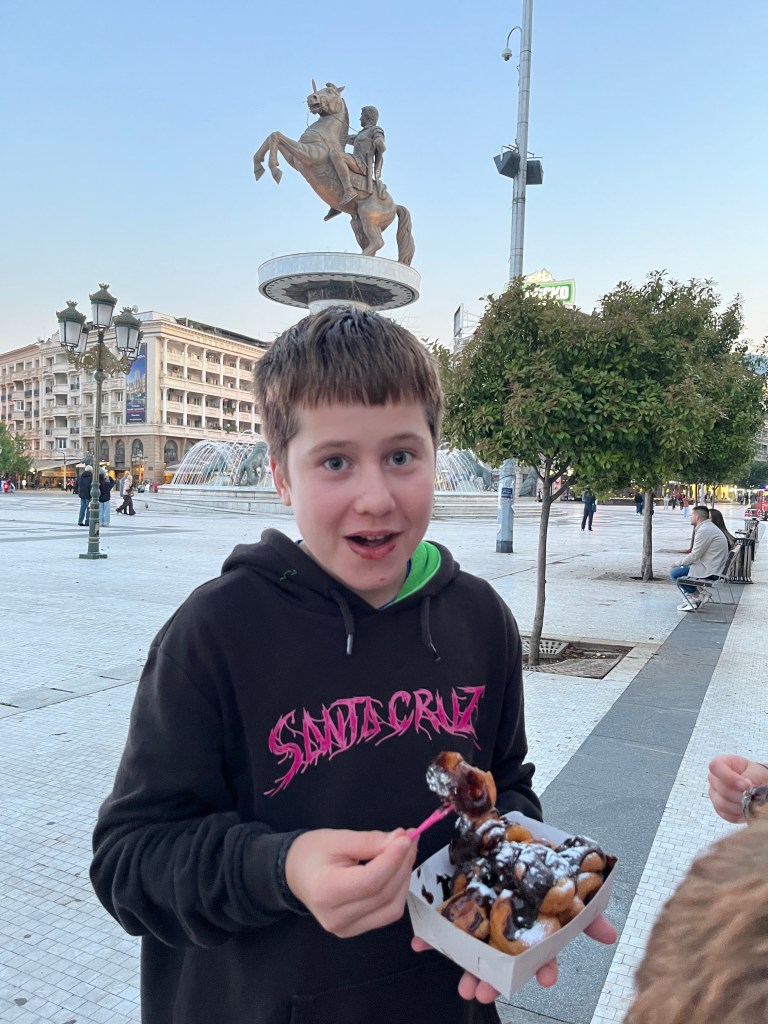
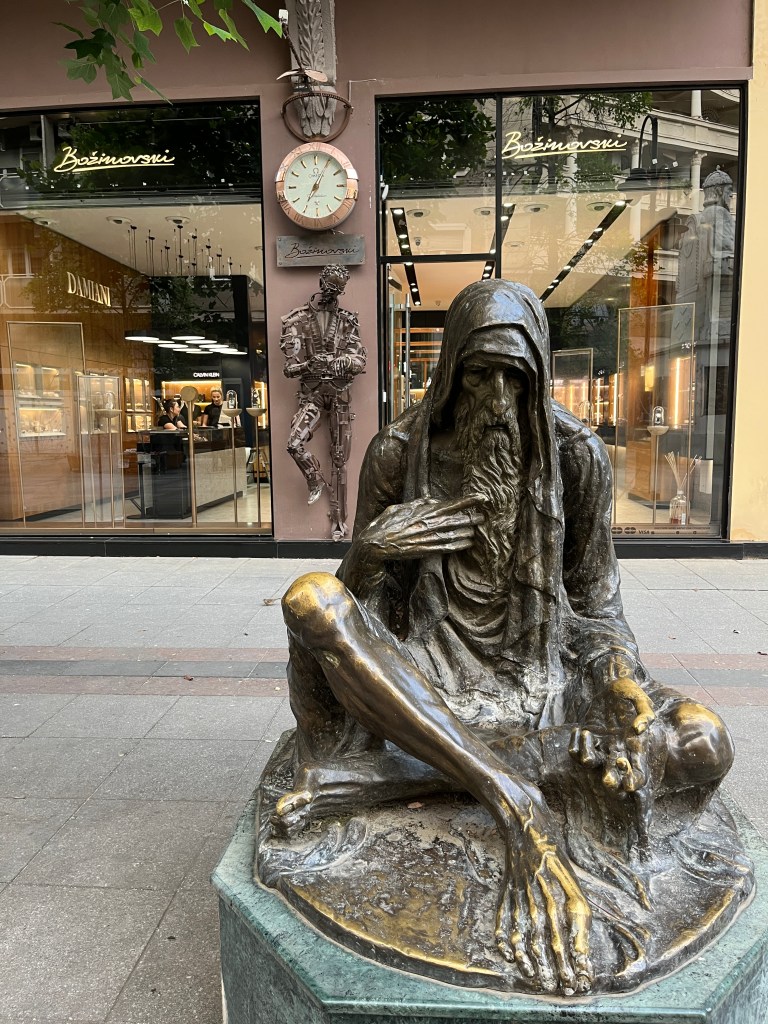
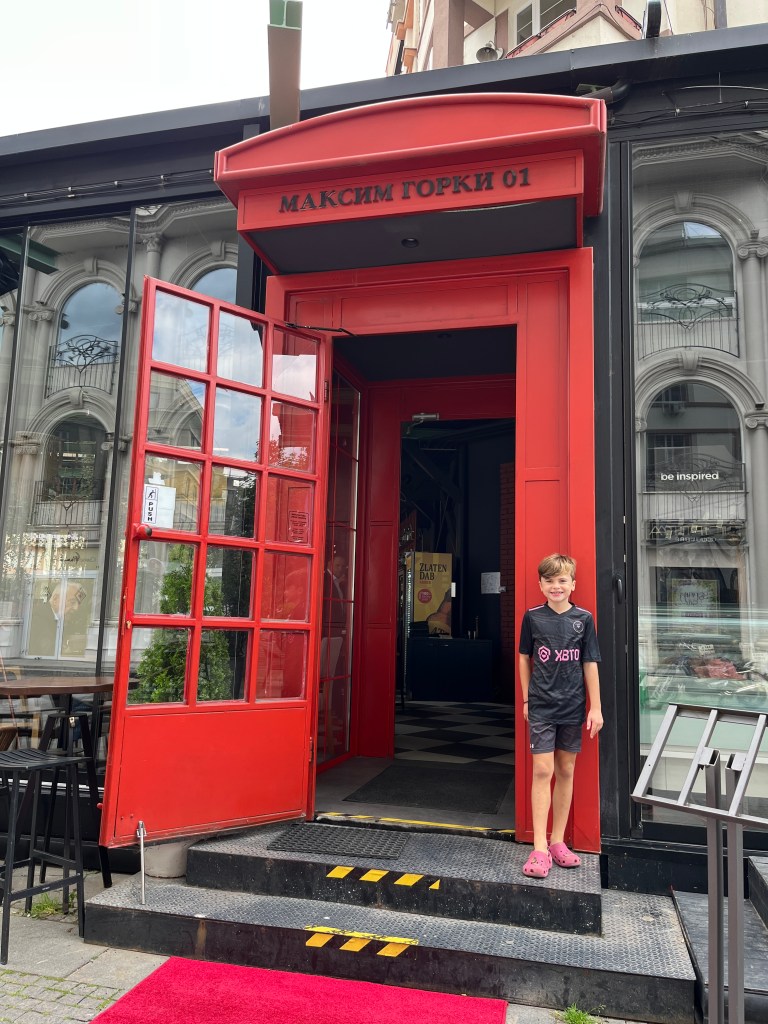
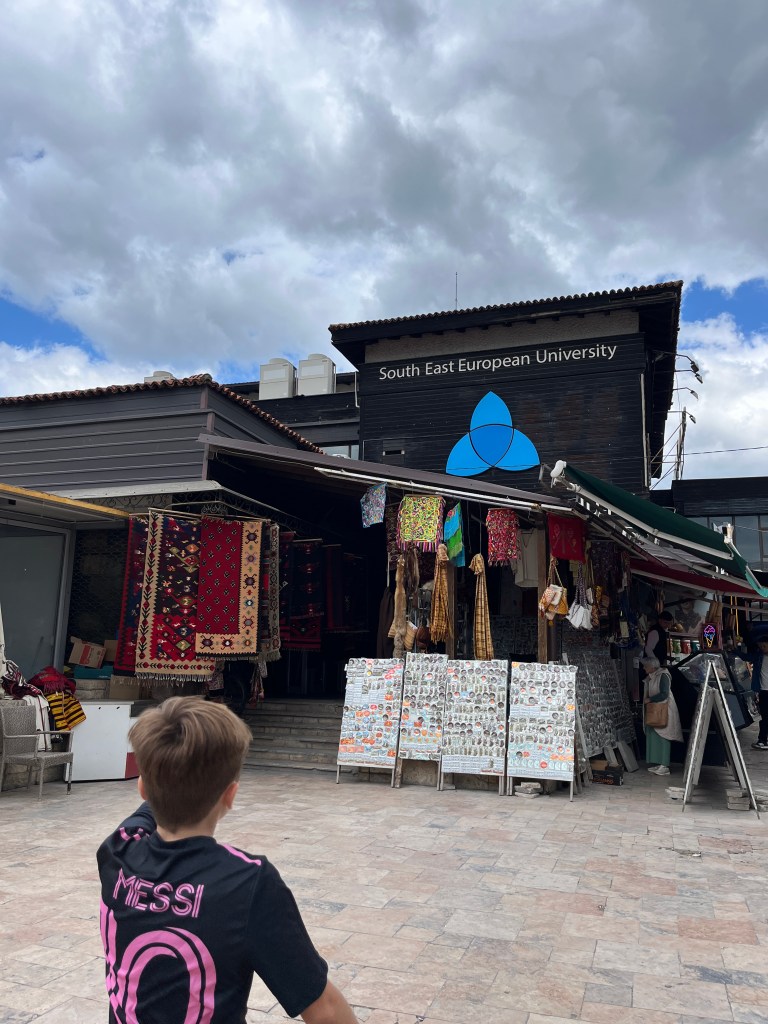
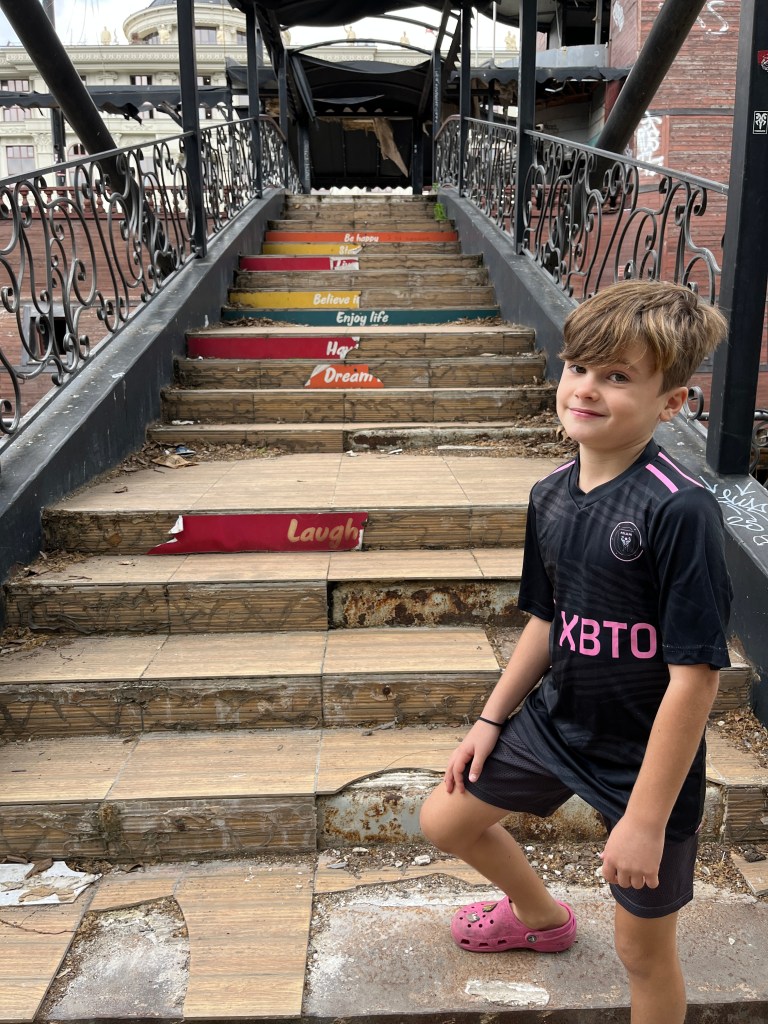
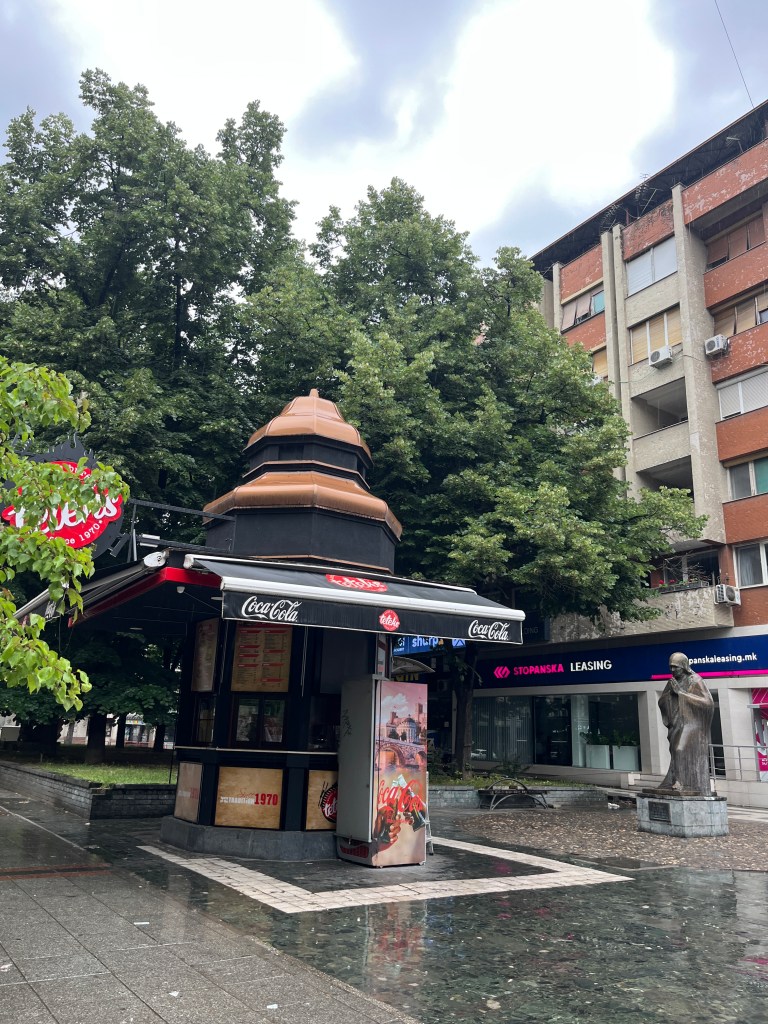
Our straight-talking Skopje City Tour guide said the Macedonian people are, amid all this blood and honey, “the hippies and hobbits of the region.” They are peace-loving and keep to themselves. Even this quirky reference reveals a fragmentation or, perhaps, a diversification of the identity of this country. I mean, “hippies” and “hobbits” live in totally separate regions of my brain, yet I can see their relation. There is diversity everywhere in the world, especially with today’s globalisation. We see Pringles in every shop we patron, but the integration of various influences here in Skopje seems less an international incorporation into an already established identity and more of a patch-work identity at its core. It’s like they are reaching for and trying on anything that might suit the young country’s common spirit. I’ll offer some photos of this. I actually found it quite cool… if a bit forlorn, at times. Again, humble and subjective reflections are all that are offered here on this blog.
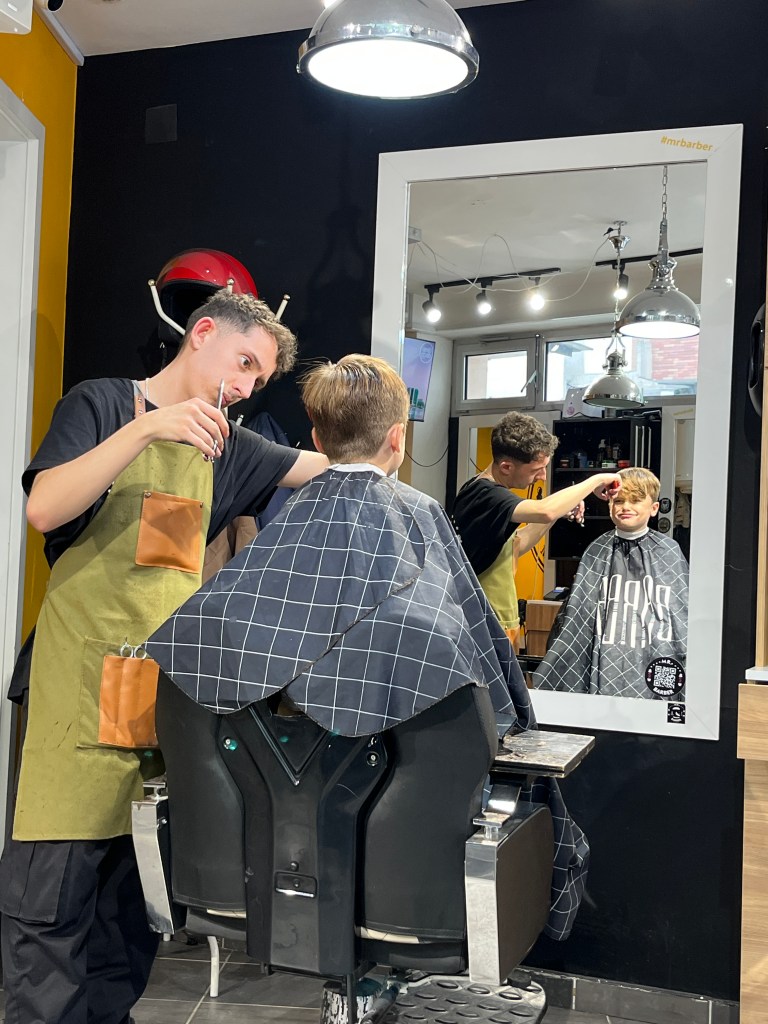
The images you are about to see might set you against ever spending your precious vacation days in this city, but I wouldn’t want to leave you with that impression. Like most cities, what really resonates is the people. And the people of North Macedonia are as cool as they come. Candid, bright, and switched-on, these are a people of resilient spirit, keen human connection, and easy warmth. The general vibe I got speaking to most people- from the one-woman-show at the handmade pasta shop to the barbers who cut the kids’ hair- was the air of an early-twenty-something. They have that sort of cool-with-what-I’m-doing-but-I haven’t-arrived-yet sort of feel. It’s chill. It says, “There’s time. We’re still becoming. Come back later, and you’ll see.” There is confidence without pride. There is an acceptance of short-comings without surrender. There is set-back without defeat. At least, that’s what I saw.
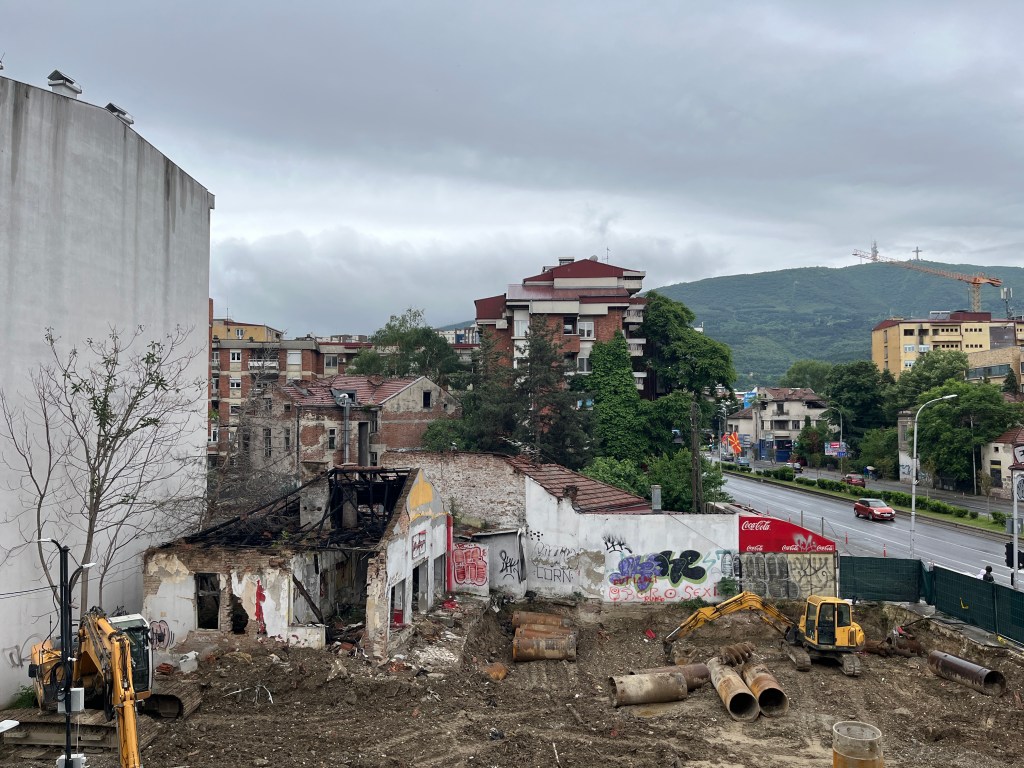
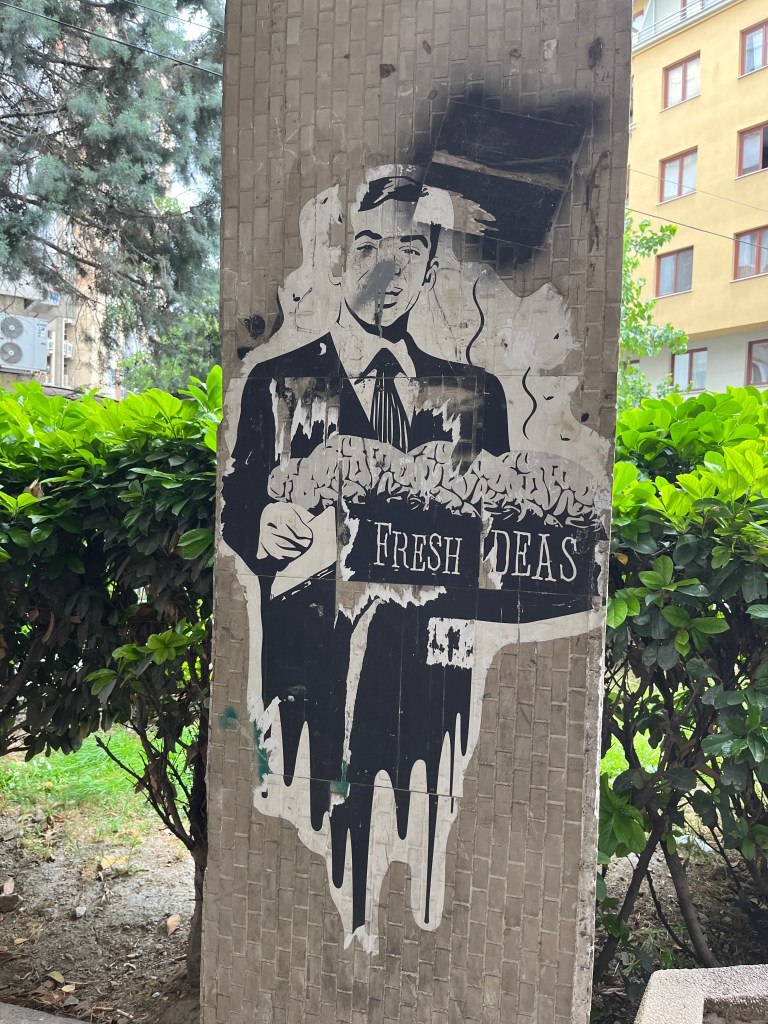
You will sense the battered spirit and this grappling for identity in the photos, I think. It’s the amalgamation of a national identity yet to be set. It’s very special, very cool. It’s the kind of cool you hope brushes off on you as you walk down the graffitied streets. But it won’t. It’s the sort of cool that’s earned. Like Third Culture Kids earn theirs. That’s part of what is so cool. Experience can’t be bought or feigned. It must be lived. I admire what the people here are living through and the manner with which they wear it.

















 Mapping the Gap
Leave a comment